
The History of Coffee in Vietnam: From the First Coffee Trees to a Global Coffee Powerhouse
The history of coffee in Vietnam began more than 160 years ago, when coffee trees were first introduced from France in the 19th century. What started as a foreign agricultural crop gradually became an important part of Vietnam’s farming, economy, and everyday culture.
Today, Vietnam is one of the world’s major coffee-producing countries, particularly known for Robusta coffee. Vietnamese coffee is also recognized for its distinctive brewing traditions, especially the slow-dripping phin filter and popular drinks such as cà phê sữa đá.
But how did coffee become such an important part of Vietnam?
The story takes us from the first coffee trees and early plantations to the Central Highlands, the expansion of Robusta production, the rise of Vietnamese coffee culture, and the country’s growing role in the global coffee industry.
The History of Coffee in Vietnam: How Coffee First Arrived
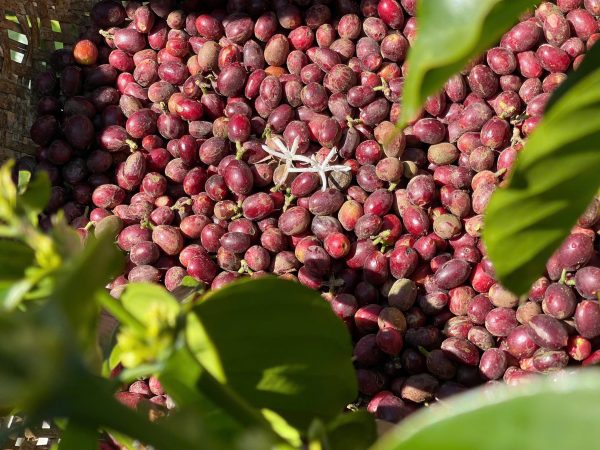
Coffee was introduced to Vietnam by French missionaries in 1857. Early coffee trees were mainly Arabica and were planted around Catholic churches in northern and central parts of the country.
At that time, coffee was still a foreign crop. The first experiments were relatively small, and growing coffee on a commercial scale was not yet easy.
The climate and growing conditions were not equally suitable everywhere. Arabica could grow in some areas, but problems such as disease and unsuitable weather limited its development.
Over the following decades, coffee cultivation gradually expanded. By the late 19th and early 20th centuries, coffee plantations had begun to appear on a larger scale under French colonial administration.
The real transformation, however, came when coffee-growing areas were developed in the Central Highlands.
From Small Plantations to the Central Highlands
During the early 20th century, the Central Highlands attracted increasing attention as a coffee-growing region.
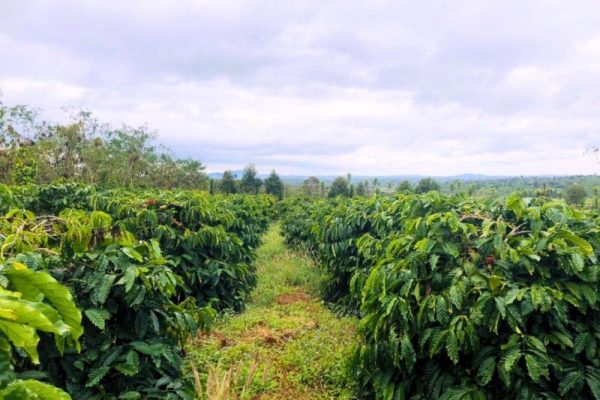
The area offered several advantages: high elevations in suitable locations, tropical conditions, and fertile red basalt soils. In the 1920s, suitable coffee-growing areas were identified and developed in places including what is now Đắk Lắk and Lâm Đồng.
This was an important turning point.
Coffee was no longer simply a plant growing around churches or small plantations. It was becoming an agricultural commodity.
By 1945, Vietnam had around 10,000 hectares of coffee, with annual production of roughly 4,500 tonnes. Much of this coffee was exported to France.
However, the coffee industry was still relatively small compared with what Vietnam would eventually become.
Why Robusta Became the Heart of Vietnamese Coffee
One of the most important developments in Vietnam’s coffee history was the spread of Robusta.
Arabica had been introduced first, but Vietnam’s climate and growing conditions proved particularly suitable for Robusta in the warmer southern regions.
Robusta, or Coffea canephora, is better adapted to Vietnam’s tropical conditions and can produce high yields under intensive cultivation. It became particularly important in the Central Highlands. FAO records that commercial development after the 1920s increasingly included Robusta in the southern highlands, while Arabica remained more important in suitable northern and highland areas.
Today, Robusta is the defining crop of Vietnam’s coffee industry.
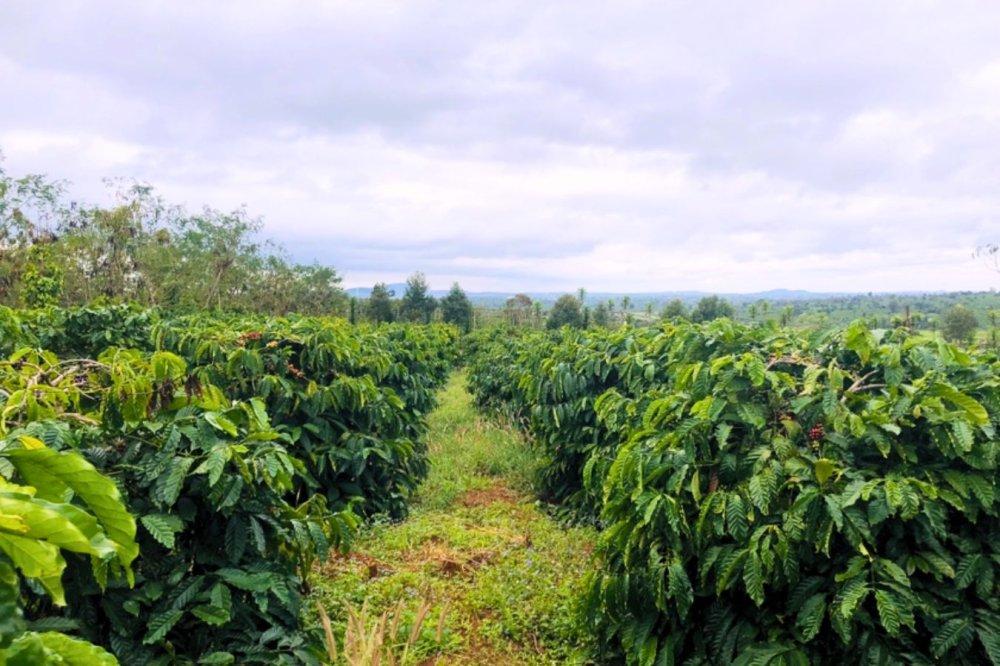
The Central Highlands — particularly Đắk Lắk, Lâm Đồng, Gia Lai and Kon Tum — became the country’s major coffee-growing region. Vietnam also developed Arabica production in cooler highland areas, including parts of the Northwest.
This difference between growing regions helped create an interesting characteristic of Vietnamese coffee: a country famous for Robusta can still produce Arabica in the right locations.
Coffee After 1975: A New Stage of Development
The development of Vietnamese coffee did not happen in one continuous process.
The period of war and the division of Vietnam disrupted agricultural production. After reunification in 1975, coffee production gradually recovered.
According to the International Coffee Organization, Vietnam’s coffee sector expanded significantly after 1975 in terms of planted area, productivity and production. Major Robusta-growing areas developed in the Central Highlands, while Arabica production expanded in the Northwest.
But the biggest change was still to come.
That change was connected to Vietnam’s economic reforms.
Vietnamese Coffee History: From Introduction to Expansion
The economic reforms known as Đổi Mới, introduced from 1986, created major changes throughout Vietnam’s agricultural sector.
Farmers gained greater incentives to produce agricultural commodities for the market, while investment and trade expanded.
Coffee became one of the crops that benefited enormously from this transformation.
Production expanded rapidly, particularly in the Central Highlands. Farmers planted coffee trees, production methods improved, and Vietnam became increasingly connected to international coffee markets.
Between 1996 and 2014, Vietnam’s coffee production increased from around 320,000 tonnes to approximately 1.4 million tonnes. Much of this growth came from the Central Highlands.
By the early 2000s, Vietnam had become the world’s second-largest coffee producer and exporter and the leading producer of Robusta coffee, according to the International Coffee Organization
This was one of the fastest transformations in the history of the global coffee industry.
A crop that had arrived in Vietnam as a foreign agricultural experiment had become a major national export industry.
Coffee Farming and the Lives of Vietnamese Farmers
The growth of coffee was not only about export statistics.
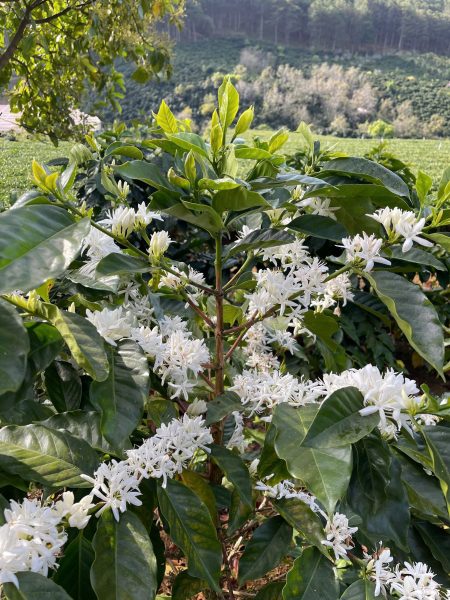
Coffee became an important source of income for hundreds of thousands of farming households, particularly in the Central Highlands.
Vietnam’s coffee sector developed largely through smallholder farming rather than only through large plantations. A World Bank study found that around 95% of Vietnam’s coffee plantations were owned by smallholders, many cultivating around one hectare or less.
This means that behind every large shipment of Vietnamese coffee are many individual farms and farming families.
Coffee cultivation also transformed the agricultural landscape of the Central Highlands. Irrigation, fertilizers, improved varieties, processing methods and farming techniques helped increase productivity considerably.
At the same time, rapid expansion also created challenges, including pressure on water resources, soil health, forests and farmers’ dependence on global coffee prices. These issues have increasingly become part of the discussion about the future of Vietnamese coffee.
From an Export Crop to a Vietnamese Coffee Culture
While coffee was becoming an important agricultural product, something else was happening in Vietnamese cities.
Vietnamese people were developing their own way of drinking coffee.
The French introduced coffee, but Vietnam did not simply copy French coffee culture.
Instead, Vietnamese coffee gradually developed its own identity.
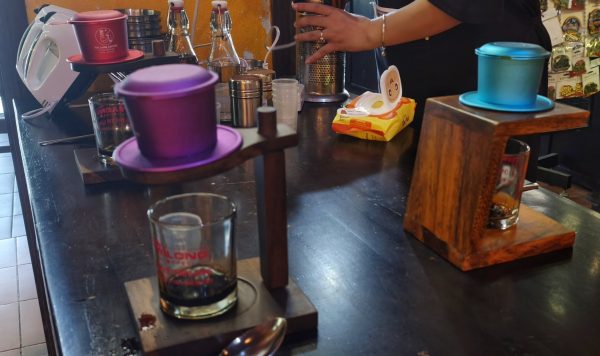
The phin filter became one of the most recognizable symbols of Vietnamese coffee. A small metal filter sits directly on top of the cup, allowing hot water to slowly pass through freshly ground coffee.
Then came combinations that are now strongly associated with Vietnam:
- Cà phê đen — black coffee
- Cà phê sữa — coffee with condensed milk
- Cà phê sữa đá — iced coffee with condensed milk
- Bạc xỉu — a milkier coffee drink
- Cà phê trứng — egg coffee
- Cà phê dừa — coconut coffee
- Cà phê muối — salted coffee
These drinks show how Vietnamese coffee culture evolved from a foreign introduction into something distinctly local.
The phin is particularly important because it represents more than a brewing method.
It reflects the Vietnamese habit of slowing down, sitting together and enjoying coffee as part of everyday life.
You can find coffee almost everywhere in Vietnam — in small cafés, on sidewalks, in local markets, at restaurants, and in modern coffee shops.
Coffee became not only something people drank for energy, but also a social and cultural experience.
Coffee and the Vietnamese Economy
Coffee eventually became one of Vietnam’s most important agricultural exports.
The country’s combination of large-scale Robusta production, relatively high yields and strong connections to international markets made Vietnamese coffee an important part of the global coffee supply chain.
The scale of this industry is significant.
In 2024, Vietnam exported approximately 1.32 million tonnes of coffee worth about US$5.48 billion. This was the first year that annual coffee export value exceeded US$5 billion.
The following coffee year, October 2024 to September 2025, brought another major milestone. Vietnam exported more than 1.5 million tonnes of coffee, generating more than US$8.4 billion in export revenue — the highest export turnover recorded at that time.
These numbers show how far the industry has travelled from the small coffee plantations of the late 19th century.
Coffee today contributes to the livelihoods of farming communities, supports processing and logistics businesses, creates employment, and connects Vietnamese agriculture with consumers around the world.
From Green Beans to a New Generation of Vietnamese Coffee
For many years, Vietnam was best known internationally as a major supplier of green Robusta beans.
But Vietnamese coffee is gradually becoming more diverse.
Today, the industry includes not only coffee farming and green-bean exports, but also roasting, processing, specialty coffee, instant coffee, ready-to-drink products, coffee shops and coffee tourism.
There is also increasing attention to coffee quality, traceability, processing methods, improved varieties and sustainable farming.
Vietnam’s coffee industry is therefore moving from a story based mainly on production volume toward one that also focuses on quality and value.
This change can already be seen in the growth of Vietnamese specialty coffee and modern local roasteries. Some Vietnamese coffee companies are working directly with farmers, experimenting with processing and fermentation, and developing new ways to present Vietnamese coffee to international consumers.
Vietnamese Coffee Today
According to recent USDA data reported in 2026, Vietnam is expected to remain the world’s second-largest coffee producer in the 2025/26 crop year, with Robusta accounting for around 95% of national output.
But Vietnamese coffee is much more than these numbers.
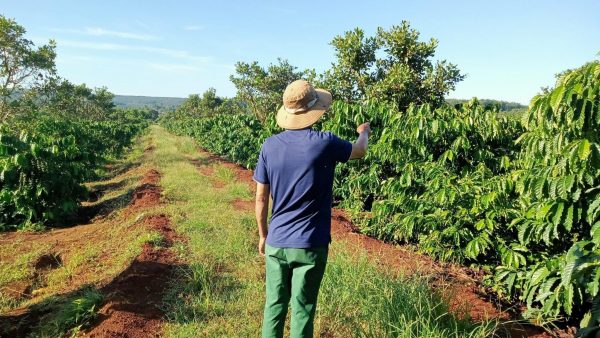
It is the farmer working in a coffee garden in the Central Highlands.
It is the green coffee bean travelling from the farm to a local roastery.
It is the smell of freshly roasted coffee.
It is the slow drip of a phin filter at a small café.
It is a glass of cà phê sữa đá on a busy Vietnamese street.
And increasingly, it is also the experience of learning where the beans come from, how they are roasted, and how Vietnamese coffee is prepared.
More than 160 years after the first coffee trees arrived, Vietnam has developed a coffee identity of its own.
The plant came from somewhere else.
The coffee culture did not.
From a Foreign Plant to a Vietnamese Identity
The history of coffee in Vietnam is a story of adaptation.
A crop introduced by French missionaries became an important agricultural product. The Central Highlands transformed it into a major farming industry. Vietnamese farmers adapted cultivation to local conditions. Vietnamese consumers created their own drinks and coffee habits. And the country eventually became one of the world’s most important coffee producers.
Today, when you drink a Vietnamese phin coffee, you are tasting more than roasted beans.
You are experiencing a small part of a story that began in the 19th century and continues to evolve today.
And that story is still being written — from the coffee farms of the Central Highlands to local roasteries and cafés across Vietnam.