
Where to Find Cheap Local Food in Hoi An
Looking for cheap local food in Hoi An? You do not need to visit expensive restaurants to enjoy the town’s traditional dishes. Some of the best local food can be found at small eateries, market stalls, and street food vendors where residents eat every day.
From Cao Lau and Mi Quang to affordable breakfasts and traditional Vietnamese snacks, Hoi An offers plenty of delicious options for budget-conscious travelers. This guide shares local food spots, practical addresses, and tips to help you discover everyday Vietnamese food beyond the main tourist streets.
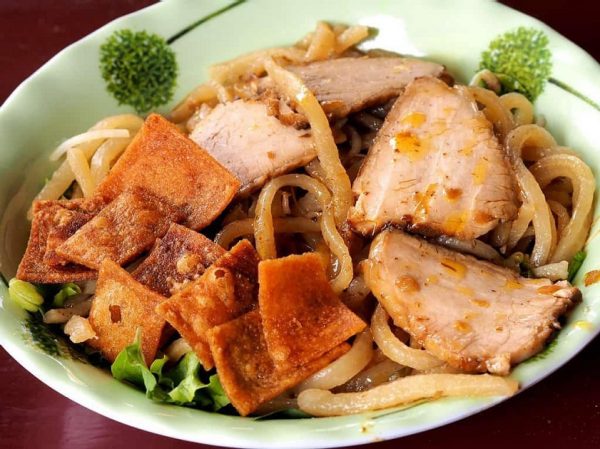
1. Cao Lau – Hoi An’s Signature Noodle Dish
Cao Lau is one of the most distinctive dishes in Hoi An. Its thick, yellow rice noodles have a firm, chewy texture that makes them different from ordinary Vietnamese noodles.
The noodles are traditionally prepared using rice treated with alkaline water and wood ash. They are served with slices of char siu-style pork, fresh herbs, bean sprouts, and crispy toppings, with only a small amount of savory sauce.
If you enjoy noodles but want to try something different from pho, Cao Lau is a must-try dish in Hoi An.
Where to eat Cao Lau: Head to the first floor of Hoi An Central Market, where you can find food stalls serving Cao Lau and other local specialties at affordable prices.
Local tip: The market is a great place to explore several Vietnamese dishes in one visit. Arrive in the morning or around lunchtime for the best chance of finding a variety of freshly prepared food.
2. Banh Xeo – Crispy Vietnamese Pancakes
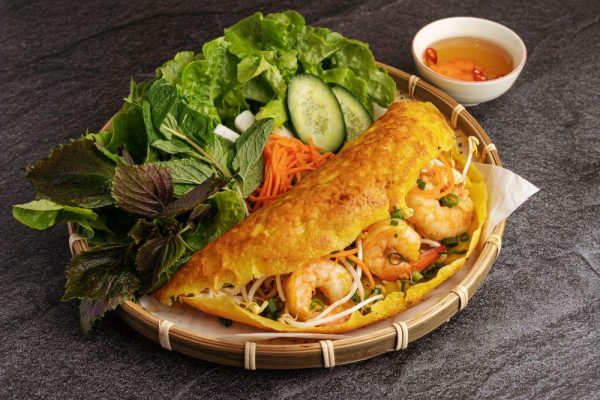
Banh Xeo is a crispy Vietnamese pancake made from rice flour, traditionally filled with ingredients such as shrimp and pork. It is served with fresh herbs, leafy greens, and dipping sauce.
Rather than eating it like an ordinary pancake, you can wrap pieces of Banh Xeo with herbs and vegetables before dipping them into the sauce. The contrast between the crunchy pancake and fresh greens makes every bite satisfying.
In Central Vietnam, Banh Xeo is especially comforting on a rainy day, when locals often crave something hot, crispy, and freshly cooked.
Where to eat: Banh Xeo Hai Dao, 160 Ly Thai To Street, Hoi An.
This is a local recommendation for visitors looking for crispy pancakes with fresh vegetables.
3. Mi Quang – A Regional Noodle Specialty
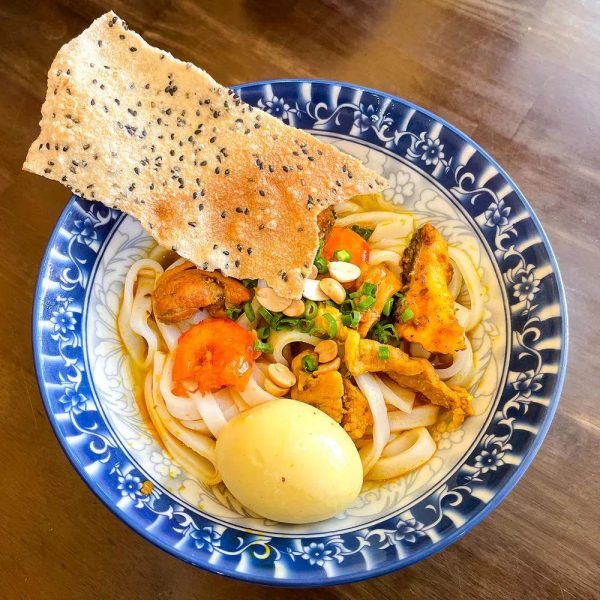
Mi Quang is a traditional noodle dish from Quang Nam Province, the region historically associated with Hoi An.
It features flat rice noodles served with a concentrated broth made with ingredients such as chicken, fish, or eel, depending on the recipe. Other versions may include pork, shrimp, and quail eggs. Peanuts, fresh herbs, and crispy rice crackers often complete the dish.
Unlike a bowl of pho, Mi Quang usually contains only a small amount of broth. The ingredients are mixed together to create a rich combination of flavors and textures.
Where to eat: Try the food stalls on the first floor of Hoi An Central Market.
Local tip: Mi Quang is a popular breakfast and lunch choice. If you visit in the morning, you can enjoy it alongside other traditional Vietnamese dishes sold at the market.
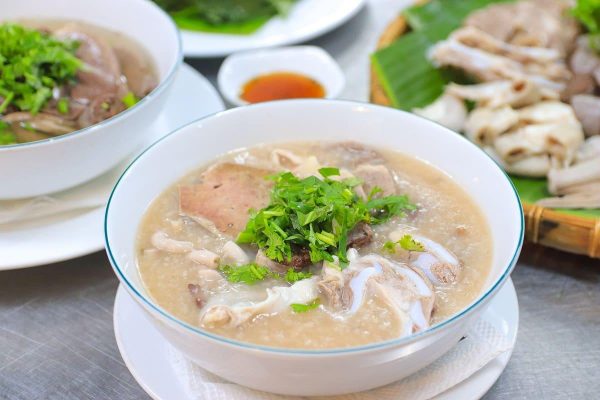
4. Chao Long – Vietnamese Pork Offal Porridge
For adventurous eaters who want to experience everyday Vietnamese food, Chao Long is worth trying.
This savory rice porridge is served with cooked pork offal, which may include intestines and other organ meats. Depending on the shop, it may come with fresh herbs, pepper, chili, and a dipping sauce.
Chao Long is commonly eaten for breakfast. It is particularly popular with people who enjoy traditional, hearty Vietnamese meals rather than Western-style breakfasts.
Where to eat: Chao Long Be Linh, 33 Tran Van Du Street, Hoi An.
The shop is recommended for an early-morning meal.
Who should try it? This dish is best suited to travelers who eat meat and are comfortable trying pork offal. If you prefer lighter or more familiar flavors, you may want to choose another breakfast option.
5. Banh Mi Op La Bo Ne – A Local Breakfast Favorite
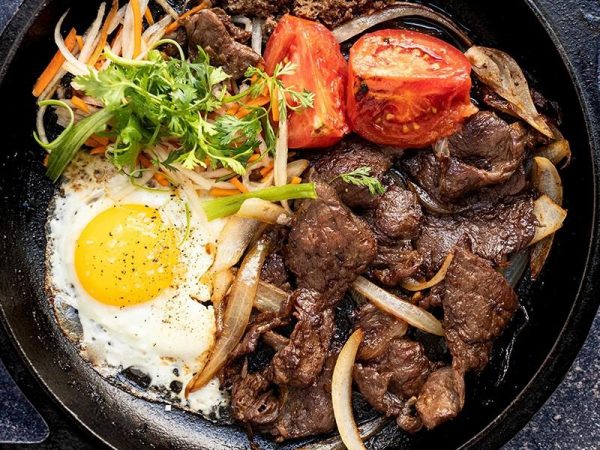
Banh Mi Op La Bo Ne is a satisfying breakfast combination of fried eggs, beef, and Vietnamese bread.
The beef is typically cooked on a hot plate, often with butter or seasoning, and served with eggs and a crispy baguette for dipping into the sauce. It is a filling alternative to noodle soup or a traditional sandwich.
While international visitors often search for Hoi An’s famous banh mi sandwiches, this hot-plate breakfast is another way to experience local eating habits.
Where to eat: Banh Mi Op La Bo Ne Hoang Gia, 264 Ly Thuong Kiet Street, Hoi An.
It is a good option if you want a hearty, affordable breakfast before exploring the town.
6. Bun Cha Ba Lien – A Budget-Friendly Noodle Meal
If you are looking for an inexpensive local meal, try Bun Cha Ba Lien.
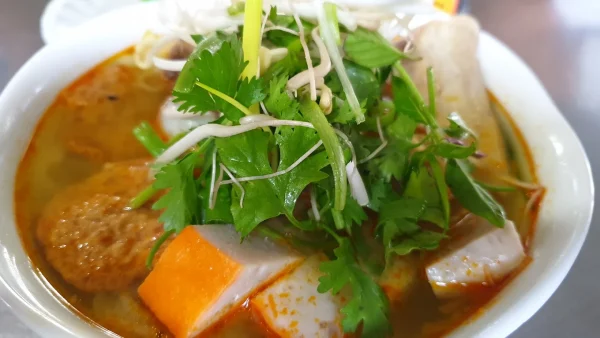
Bun cha is a Vietnamese dish made with rice vermicelli and grilled or prepared pork patties, accompanied by herbs and a dipping sauce. Recipes and serving styles vary between regions and individual shops.
According to the local recommendation, a bowl at Ba Lien starts at around 25,000 VND. The pork patties are particularly appreciated, and the service is known for being quick.
Where to eat: Bun Cha Ba Lien, 126/6 Ly Thuong Kiet Street, Hoi An.
This small eatery is worth considering when you want a simple, filling meal without spending much.
Prices may change, so check the current menu when you visit.
7. Hoi An Chicken Rice – A Famous Local Specialty
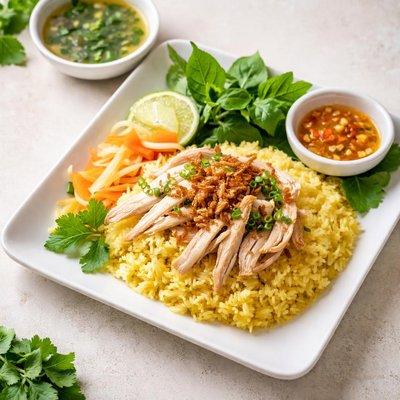
Com Ga, or Vietnamese chicken rice, is one of the dishes most closely associated with Hoi An.
The rice is cooked with chicken broth and often has a golden color. It is served with tender chicken, commonly shredded, along with herbs, pickled vegetables, and sometimes a bowl of broth.
The combination is simple but flavorful. The rice absorbs the savory chicken stock, while the herbs and pickled vegetables add freshness and balance.
Where to eat: Com Ga Linh, 64 Hung Vuong Street, Hoi An.
Chicken rice is suitable for lunch or an early dinner, depending on the shop’s opening hours. If you want to explore Hoi An’s culinary identity, this is one dish you should not miss.
8. Banh Beo Co Tu – Small Rice Cakes in the Afternoon
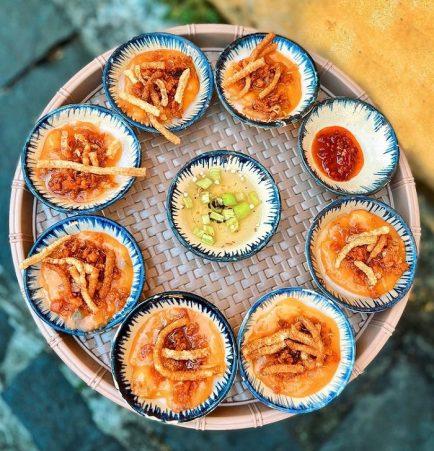
Banh Beo is a traditional Vietnamese snack made from small steamed rice cakes served in little dishes.
In Central Vietnam, the cakes are often topped with savory ingredients such as shrimp, crispy shallots, and seasoned sauce. You eat them in small portions, making them ideal for an afternoon snack rather than a full meal.
Where to eat: Banh Beo Co Tu, in the small alley next to Sai Gon Hoi An General Hospital.
The stall is recommended for the afternoon.
Because the location is described by a nearby landmark rather than a full street address, look for the small alley beside the hospital when you arrive.
9. Xi Ma – Hoi An’s Black Sesame Sweet Soup
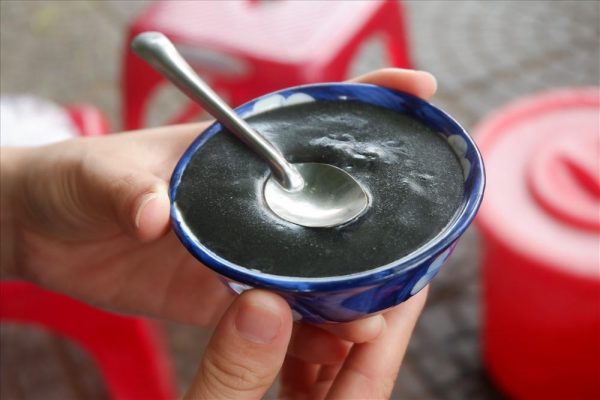
Xi Ma is a traditional black sesame dessert that is especially associated with Hoi An.
This thick, dark-colored sweet soup has a distinctive sesame flavor and a smooth texture. Its appearance may be unfamiliar to first-time visitors, but it is an interesting local specialty for anyone who enjoys exploring traditional Vietnamese desserts.
Xi Ma is commonly sold by small street vendors rather than large restaurants.
Where to find it: Look for the Xi Ma vendor on Nguyen Truong To Street, opposite Hoi An Church. The vendor may move to the other side of the street at different times of day, so look around the church area if you cannot find the stall immediately.
Best time to try it: Morning is a good time to look for this traditional dessert.
10. Banh Mi – Vietnam’s Famous Baguette Sandwich
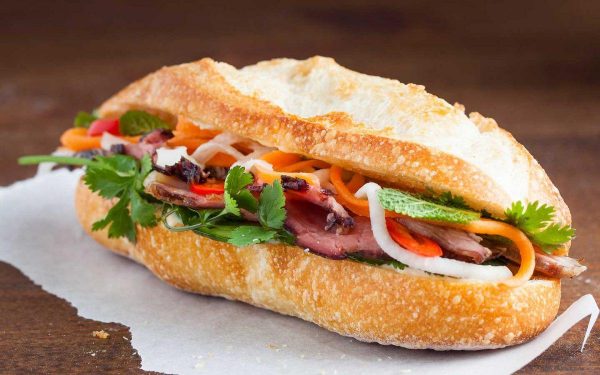
Banh Mi is one of Vietnam’s most popular quick meals. A crispy baguette is filled with ingredients such as Vietnamese pork sausage, pate, grilled meat, eggs, pickled vegetables, fresh herbs, and sauces.
Every shop has its own recipe, so even a simple sandwich can taste different from one vendor to another.
If you are looking for an inexpensive breakfast, lunch, or snack, banh mi is an easy choice.
Where to eat:
- Banh Mi Sai Gon: 151 Tran Hung Dao Street, Hoi An. A basic sandwich with Vietnamese pork sausage is reported to cost around 15,000 VND.
- Banh Mi Sum: Located next to Banh Mi Sai Gon. It is reported to cost around 10,000 VND more for a sandwich, with a richer and more satisfying taste.
These are local recommendations for travelers who want to compare two nearby sandwich shops.
11. Banh It and Banh Bot Loc – Traditional Vietnamese Cakes
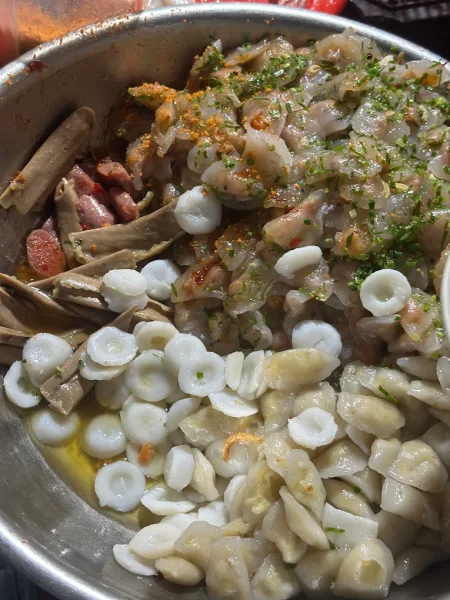
If you enjoy small savory snacks, look for Banh It and Banh Bot Loc.
Banh It comes in several regional varieties, often made from sticky rice flour or other rice-based doughs, with savory fillings in some versions. Banh Bot Loc is made from tapioca starch, giving it a chewy, translucent wrapper that commonly contains shrimp and pork.
These cakes are usually served with fish sauce and are popular as snacks between meals.
Where to eat: Co Be’s Banh It and Banh Bot Loc, approximately 115 Nguyen Truong To Street, Hoi An.
The stall is recommended at around 5 PM. There is also a sugarcane juice vendor nearby, making this a convenient stop for an afternoon snack.
12. Banh Canh Chua Cau – A Warm Afternoon Bowl
Banh Canh is a Vietnamese noodle soup made with thick noodles, which may be prepared from tapioca starch, rice flour, or a combination of the two. The noodles have a soft, chewy texture and are served in a hot, savory broth.
If you are hungry in the middle of the afternoon, a bowl of Banh Canh can be a comforting alternative to the more familiar Cao Lau or Mi Quang.
Where to eat: Look for the small Banh Canh Chua Cau stall on Phan Chau Trinh Street, in front of Cam Pho Kindergarten. The sign is small, so keep an eye out as you walk along the street.
Best time to visit: Around 3 PM, according to the local recommendation.
Small street stalls can have limited selling hours, so it is worth arriving around the suggested time.
13. Chao Vit – Vietnamese Duck Porridge
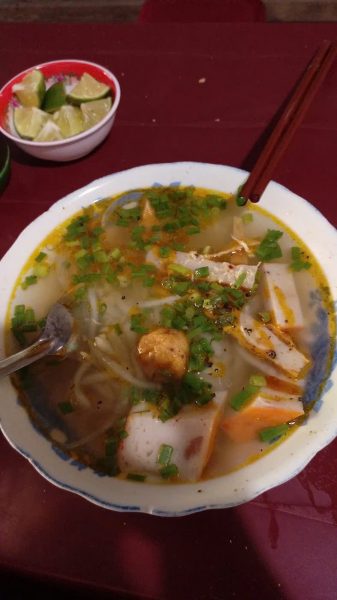
Chao Vit is rice porridge served with duck meat. It is a comforting Vietnamese dish with a savory broth, tender duck, and herbs. Some places serve the duck separately, allowing you to enjoy it alongside the porridge.
This is a good option for travelers who want to try something different from the more familiar chicken rice or noodle dishes.
Where to look: Around Tan An Market, where you can also explore other local snacks and casual food stalls.
As with many neighborhood eateries, opening hours and availability may vary, so ask locally if you cannot find a stall serving it.
14. Da Tron and Other Vietnamese Street Snacks
If you enjoy grazing on different snacks instead of sitting down for a full meal, the area around Tan An Market is worth exploring.
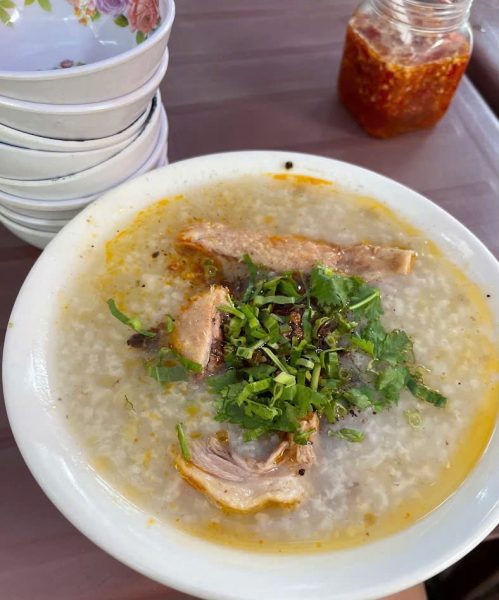
One snack to look for is Da Tron, a mixed Vietnamese street snack made with seasoned ingredients and sauces. Recipes vary, so ask the vendor what is included before ordering.
You may also find Nem Tre Tron, a mixed snack made with fermented or seasoned pork products, and grilled rice paper with pate, commonly known as Banh Trang Nuong Pate.
Where to look: Around Tan An Market and at Co Lien’s snack stall.
These small vendors are a good way to discover everyday Vietnamese snack culture. If you are unsure what to order, ask the vendor to recommend a popular item or point to the ingredients you would like to try.
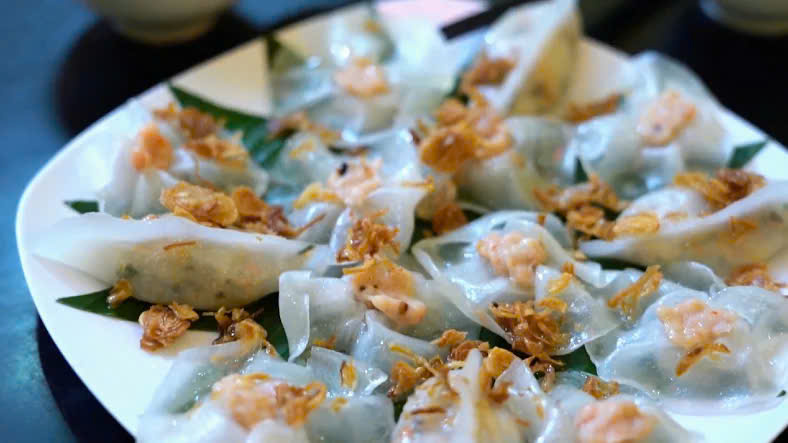
15. White Rose Dumplings – A Delicate Hoi An Specialty
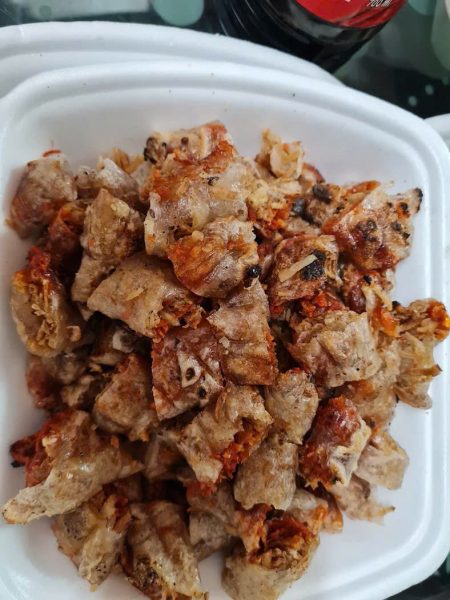
Banh Bao Banh Vac, widely known among international visitors as White Rose Dumplings, is another specialty associated with Hoi An.
These delicate steamed dumplings are made with thin rice-flour wrappers and typically contain shrimp or a shrimp-and-pork filling. Their folded shapes resemble small white flowers, and they are usually topped with crispy shallots and served with dipping sauce.
The dumplings are lighter than many fried snacks and are a good choice if you want to sample another traditional dish from the town.
Where to eat: White Rose Restaurant, 533 Hai Ba Trung Street, Hoi An, is a well-known place to try them.
White Rose Dumplings are a useful addition to your food itinerary if you have time to explore beyond the market stalls.
A Simple Guide to Eating in Hoi An
If you have only one or two days in Hoi An, use this suggested schedule to sample a variety of local foods without trying to eat everything at once.
| Time | What to try | Where to go |
|---|---|---|
| Early morning | Chao Long or Banh Mi Op La Bo Ne | Be Linh or Hoang Gia |
| Breakfast or lunch | Cao Lau or Mi Quang | First floor of Hoi An Central Market |
| Lunch | Com Ga | Ba Van on Phan Chau Trinh Street |
| Around 3 PM | Banh Canh | Near Cam Pho Kindergarten |
| Around 5 PM | Banh It or Banh Bot Loc | Co Be on Nguyen Truong To Street |
| Afternoon or evening | Local snacks | Around Tan An Market |
This is a flexible guide rather than a fixed itinerary. You can choose the dishes that appeal to you and adjust the schedule according to the stalls’ opening hours.
After Local Food, Enjoy a Cup of Vietnamese Coffee at Tri Long Coffee
After exploring Hoi An’s local food stalls, why not take a break with a cup of freshly brewed Vietnamese coffee?
Coffee is an important part of everyday life in Vietnam. Locals often start their mornings with a strong coffee, sit down for a chat with friends, or enjoy a quiet moment with a traditional phin filter. For travelers, trying Vietnamese coffee is another simple way to experience local culture.
If you are looking for a place to enjoy coffee beyond the busy tourist streets, visit Tri Long Coffee Showroom & Roasting Factory, at 25 Thich Quang Duc Street, Hoi An.
Here, you can enjoy Vietnamese coffee while discovering the beans and roasting process behind every cup. Tri Long roasts coffee daily, supplying cafes, restaurants, and hotels in Hoi An and nearby areas. Visitors are welcome to learn about different coffee beans, explore the roasting process, and discover what makes Vietnamese coffee distinctive.
Whether you prefer the bold taste of traditional phin coffee or simply want a relaxing stop between food adventures, Tri Long Coffee offers an opportunity to slow down and experience another part of local life.
If you would like to do more than just drink coffee, you can also join a Vietnamese coffee-making class to learn how to prepare local signature drinks yourself.
Plan your visit to Tri Long Coffee
- Address: 25 Thich Quang Duc Street, Hoi An
- Website: https://trilongcoffee.com/
- WhatsApp: +84905454727
Enjoy Hoi An through its local food, and finish your day with a good cup of Vietnamese coffee.
Tips for Finding Good Local Food in Hoi An
1. Explore markets in the morning.
Hoi An’s markets are especially interesting early in the day, when locals shop for ingredients and stop for breakfast. You can often find noodle dishes, rice meals, and traditional snacks in one place.
2. Look beyond the busiest tourist streets.
Some neighborhood eateries are small, simple, and easy to miss. Walking a little farther from the main tourist areas can help you discover more everyday local food.
3. Carry some Vietnamese dong in cash.
Small market stalls and street vendors may prefer cash. Keeping smaller banknotes on hand can make paying for inexpensive meals easier.
4. Check opening hours before visiting.
Some traditional food stalls sell only in the morning or afternoon, and popular dishes may sell out early. The times in this guide are based on local recommendations and may change.
5. Ask about ingredients.
Vietnamese dishes may contain pork, seafood, peanuts, fish sauce, or other ingredients that are not immediately obvious. If you have dietary restrictions or allergies, confirm the ingredients before ordering.
6. Try a little at a time.
Hoi An has so many dishes that it is easy to order more than you can eat. Share several dishes with friends or choose small snacks throughout the day so you can discover more flavors.
Final Thoughts: Discover Hoi An Through Its Local Food
Eating in Hoi An is about more than visiting famous restaurants or photographing beautiful dishes. It is also about discovering the small food stalls where people stop for breakfast, the market vendors preparing noodles at lunchtime, and the neighborhood snack shops that become busy in the afternoon.
From chewy Cao Lau and fragrant Mi Quang to crispy Banh Xeo, traditional black sesame sweet soup, and inexpensive Banh Mi, the town offers plenty of ways to explore Vietnamese food without a large budget.
If you want to experience Hoi An more like a local, start with a simple bowl of noodles at the market, try a traditional snack in the afternoon, and leave room for something you have never tasted before.
Sometimes, the most memorable part of a trip is not the most famous restaurant. It is the little stall you discover by chance, the friendly vendor who recommends a dish, or the flavor that makes you want to come back for another bowl.
Enjoy exploring the local food of Hoi An!