
Coffee roasting has changed dramatically over the centuries. What once depended almost entirely on fire, simple tools, and the experience of the person roasting the beans has developed into a process supported by precise temperature control, sensors, airflow systems, and digital roast profiles.
The story of coffee roasting technology is not simply a story about machines becoming more advanced. It is also a story about how people have learned to understand what happens inside a coffee bean when heat transforms green beans into the aromatic brown beans we use to make coffee.
Today, modern coffee roasters can measure and record temperatures throughout the roasting process. However, the skill and judgment of the roaster remain important. Technology provides information and control, while the roaster decides how to use it.

From Fire to the First Coffee Roasting Methods
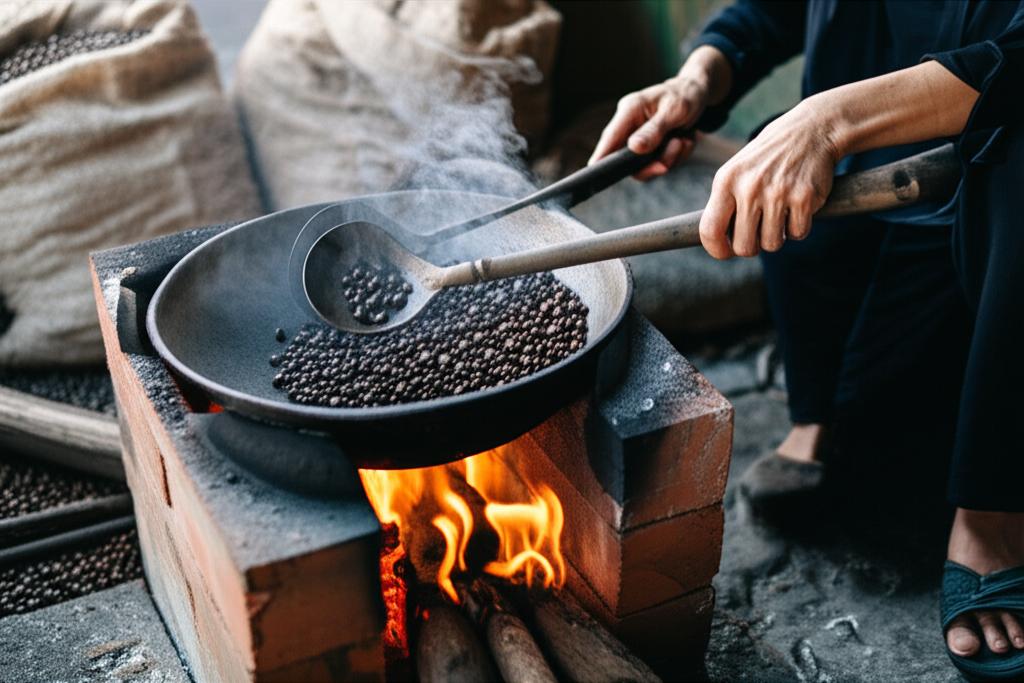
Before modern coffee roasting machines existed, people had to roast coffee using simple cooking tools and an open heat source.
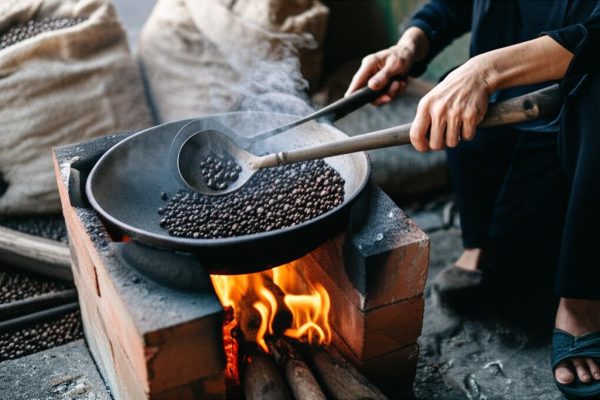
Early roasting methods were often based on placing green coffee beans in a pan, pot, or other metal container over a fire. The beans had to be moved continuously to prevent them from burning.
There were no digital thermometers, roast profiles, or automatic controls. The roaster had to observe the beans carefully.
Color was one of the most important signs. As green coffee beans heated up, they gradually changed from green to yellow, then light brown and eventually darker brown. The smell also changed as the beans developed their characteristic roasted coffee aroma.
The sound of the beans provided another important clue. During roasting, the beans eventually begin to crack as pressure builds inside them. These sounds, now known as the first crack and second crack, became useful reference points for experienced roasters.
In other words, early coffee roasting was highly dependent on human senses.
The roaster watched, listened, smelled, stirred, and made decisions based on experience.
The Development of Mechanical Coffee Roasters
As coffee became more popular around the world, roasting larger quantities consistently became increasingly important.
This led to the development of mechanical coffee roasting machines.
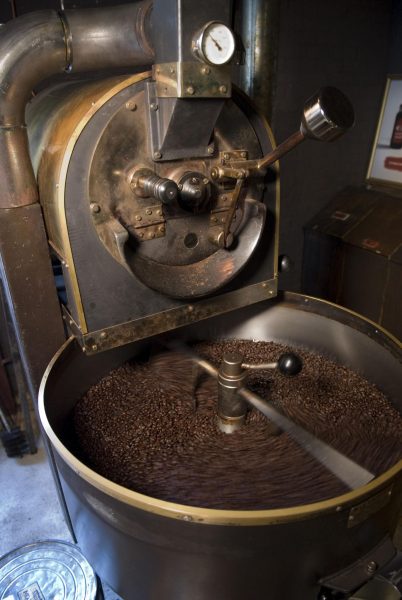
One important development was the rotating drum roaster. Instead of manually stirring beans in a pan, coffee could be placed inside a rotating metal drum. The movement helped expose the beans more evenly to heat.
This was an important step in the history of coffee roasting technology.
A mechanical drum made it possible to roast larger quantities of coffee while reducing the need for constant manual stirring. It also created a more controlled environment in which heat could be applied more consistently.
The basic principle remains familiar today: green coffee beans are heated while being continuously moved, allowing the beans to develop through a carefully controlled roasting process.
Gas and Electric Coffee Roasters
The next major stage in coffee roasting technology was the development of more sophisticated heating systems.
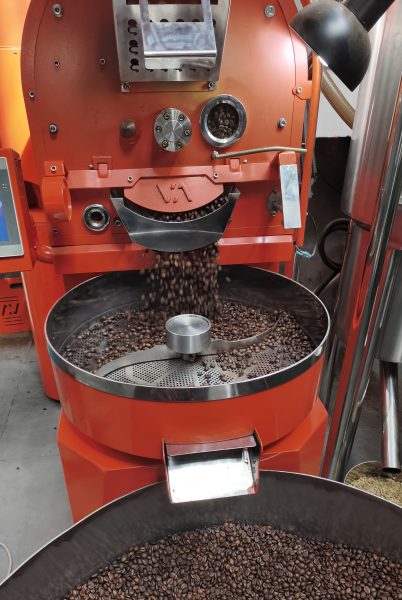
Gas-powered roasters became widely used because they allowed roasters to adjust the heat applied to the coffee. Electric roasting systems also developed, providing another way to generate and control heat.
These developments changed the role of the roaster.
Instead of simply deciding when the beans looked ready, the roaster could begin adjusting the heat during different stages of the roast.
This made it easier to develop different roast styles for different types of coffee.
For example, a roaster might use a different approach for a dense Arabica from a high-altitude growing region than for a Robusta grown in a warmer climate.
The origin, density, moisture content, processing method, and desired flavor all influence how a coffee should be roasted.
Why Temperature Became So Important
Modern coffee roasting technology is largely built around one important idea: understanding and controlling heat.
Roasting is a series of chemical and physical changes. As the green coffee bean absorbs heat, its moisture decreases, its structure changes, and chemical reactions create many of the aromas and flavors associated with roasted coffee.
Temperature therefore became one of the most useful pieces of information available to a roaster.
Modern roasting machines can monitor temperatures during the process. Depending on the machine, roasters may track bean temperature, environmental temperature, airflow, and other variables.
This information helps the roaster understand what is happening during the roast.
Instead of saying only, “The beans look dark enough,” a roaster can look at temperature data and the development of the roast over time.
This does not eliminate the importance of experience. It gives the roaster another tool for making decisions.
From Watching the Beans to Creating a Roast Profile
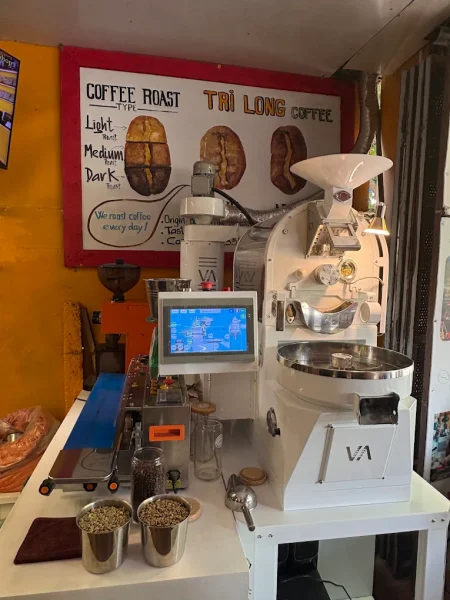
One of the biggest changes brought by modern technology is the ability to create and record a coffee roast profile.
A roast profile is essentially a record of how the coffee was roasted over time. It can include temperature changes, timing, airflow, heat application, and important events during the roast.
One of these important events is the first crack.
When coffee reaches a certain stage of development, pressure inside the beans causes them to make a series of popping sounds. This is known as the first crack and is an important reference point for many roasting styles.
The roaster can use the timing and behavior of the first crack, together with temperature and other observations, to decide how the roast should continue.
Modern software can display this information as a graph. A roaster can then compare different batches and adjust future roasts.
This is particularly useful for businesses that need consistency.
If a café or hotel wants the same coffee flavor week after week, being able to record and reproduce a roast profile can be extremely valuable.
Airflow and Other Modern Controls
Temperature is not the only variable that modern coffee roasters can control.
Airflow is another important part of the roasting process. Adjusting airflow affects how heat and smoke move through the roasting chamber and can influence the way the roast develops.
Depending on the machine, the roaster may also be able to control drum speed and other parameters.
These controls allow experienced roasters to make smaller adjustments during the roast.
The goal is not necessarily to use every available setting. The goal is to understand which variables matter and how they interact with the coffee being roasted.
This is where technology and human knowledge work together.
Does Technology Make Coffee Roasting Easier?
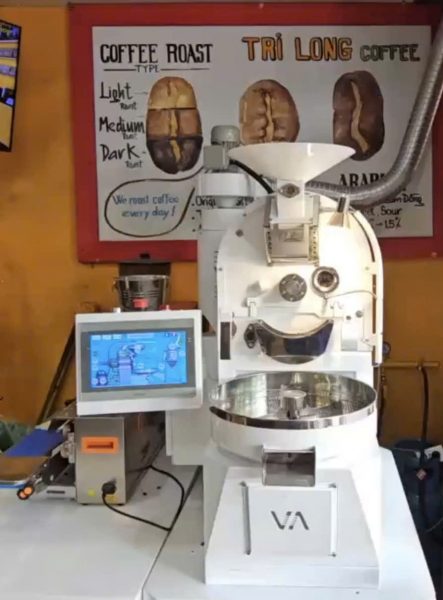
In some ways, yes. Modern equipment can make roasting more measurable, repeatable, and efficient.
But advanced equipment does not automatically make someone a skilled coffee roaster.
A machine can show temperature data, but the roaster still needs to understand what the data means.
The same temperature curve may produce different results depending on the green coffee. Two beans from different origins can react differently to the same roasting approach.
This is why experienced roasters still use their senses.
They observe the color of the beans. They listen for cracking sounds. They smell the changing aromas. They monitor the roast and later taste the finished coffee.
Technology reduces uncertainty, but it does not remove the need for knowledge.
Coffee Roasting Technology in Vietnam
Vietnam has a particularly interesting coffee story because of the country’s strong connection with Robusta production.
Vietnam is one of the world’s major coffee-producing countries, and Robusta has played an important role in the country’s coffee industry.
At the same time, Vietnam’s coffee culture has continued to develop. Alongside traditional Vietnamese coffee preparation, more cafés, roasters, and coffee businesses are exploring different origins, roasting styles, brewing methods, and flavor profiles.
This has also increased interest in modern roasting technology.
In coffee-producing areas such as Buon Ma Thuot and Da Lat, as well as coffee-consuming cities such as Hanoi, Ho Chi Minh City, and Hoi An, roasting can range from small-batch artisanal production to larger commercial operations.
Modern equipment allows Vietnamese roasters to work with both Robusta and Arabica and to experiment with different roast profiles.
What Happens Inside a Modern Coffee Roastery?
A modern coffee roastery is more than a room with a large roasting machine.
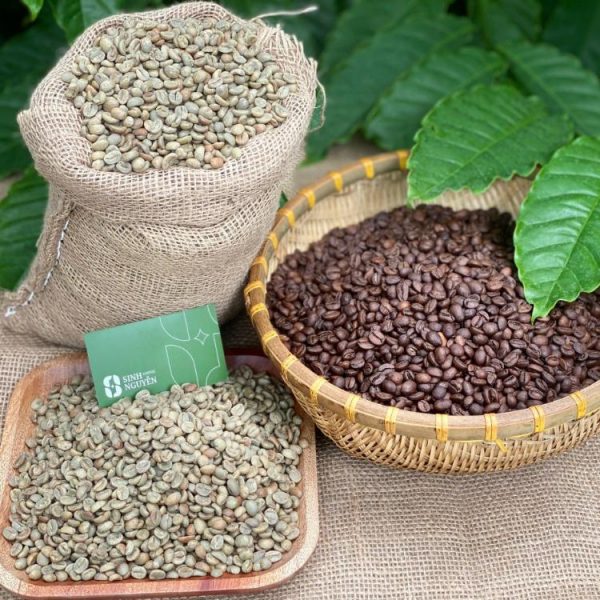
The process begins with green coffee beans. Before roasting, the beans need to be selected and assessed according to their origin, variety, processing method, moisture, density, and quality.
The roasting stage then transforms these green beans through heat.
After roasting, the beans need to be cooled quickly to stop the roasting process. They can then be stored, ground, brewed, tasted, and evaluated.
At a professional roastery, these stages are connected.
Roasting technology helps control the transformation, while brewing and tasting help determine whether the result matches the intended flavor.
This is why coffee roasting is both a technical process and a sensory craft.
From the Roasting Machine to Your Coffee Cup
It is easy to think of coffee roasting as simply heating green beans until they become brown.
In reality, roasting is one of the most important stages between the coffee farm and your cup.
The roasting process can influence sweetness, acidity, bitterness, body, aroma, and the overall balance of a coffee.
Modern technology gives roasters more information about this process than ever before.
However, the final test is still the cup.
A roast profile may look excellent on a computer screen, but the coffee still needs to taste good.
This is why professional roasting combines technology with tasting.
The machine measures. The roaster observes. The cup tells the final story.
Seeing Coffee Roasting in Hoi An
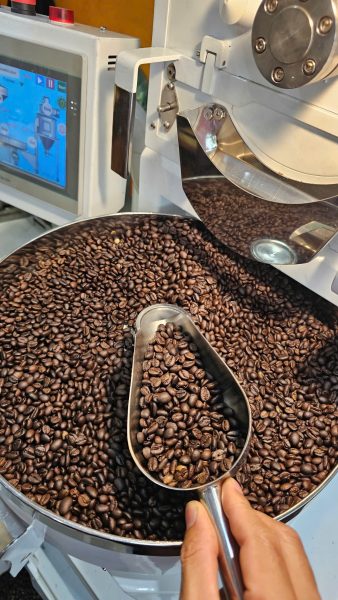
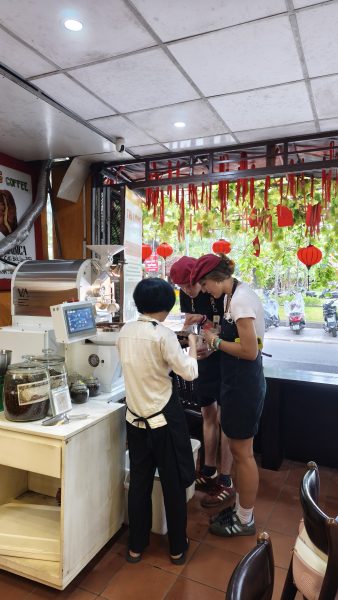
At Tri Long Coffee, visitors can see this process more closely at our coffee roasting factory in Hoi An.
Our roastery has been producing and roasting coffee since 2016 and supplies coffee to cafés, restaurants, and hotels in Hoi An and nearby areas.
Visitors can see green coffee beans before roasting, observe the roasting process, and learn how heat changes the beans from green to roasted coffee.
The experience also introduces different types of coffee, including Robusta and Arabica, and explains how roasting time, temperature, bean characteristics, and roast level can influence the final cup.
After roasting, coffee becomes more than a technical product. It becomes something to smell, taste, brew, and share.
The Future of Coffee Roasting Technology
Coffee roasting technology will continue to develop.
Machines are becoming more precise. Sensors are becoming more sophisticated. Software can collect more data, and automation is making some parts of the roasting process easier to control.
Artificial intelligence and automated roast profiling may also become more common in the future.
But coffee roasting will probably remain a combination of technology and human judgment.
Coffee is an agricultural product, and every harvest can be slightly different. Weather, soil, altitude, variety, processing, storage, and many other factors can affect the green bean.
No machine can completely remove this natural variation.
The future of coffee roasting is therefore unlikely to be about replacing the roaster. Instead, technology can give roasters better tools to understand the coffee and make more informed decisions.
From a simple pan over a fire to a modern machine with digital temperature monitoring, the basic goal remains the same: transform green coffee into a roasted bean that produces a delicious cup.
That is the real story of coffee roasting technology — not simply machines becoming more advanced, but people continuously finding better ways to understand, control, and enjoy coffee.