
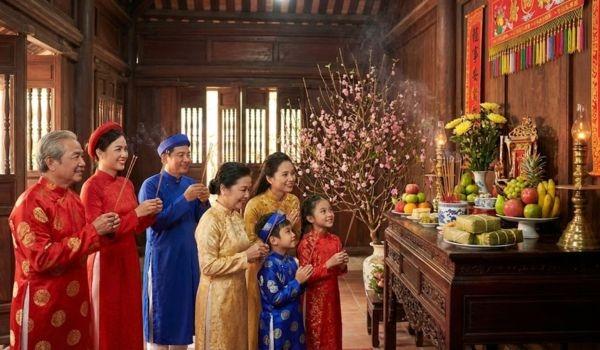
If you travel around Vietnam, you may notice something interesting in many Vietnamese homes: a small altar with flowers, fruit, photographs, and several burning incense sticks. Sometimes, you can even smell the gentle fragrance of incense drifting through the streets early in the morning.
Have you ever wondered why Vietnamese people burn incense at home? Is it a religious practice, a family tradition, or something else?
The answer is deeply connected to Vietnamese culture, family values, and the traditional belief in remembering and honoring ancestors.
Let’s explore the meaning behind this beautiful tradition.
1. Why Do Vietnamese People Burn Incense at Home? Understanding Ancestor Worship
One of the main reasons Vietnamese people burn incense at home is to honor their ancestors.
In Vietnamese culture, family is extremely important. People are taught from a young age to respect their parents, grandparents, and previous generations. There is a traditional Vietnamese saying:
“Uống nước nhớ nguồn” – When drinking water, remember its source.
This expression reminds people to remember where they come from and show gratitude to those who came before them.
Many Vietnamese families believe that although their ancestors are no longer physically present, their spiritual connection with the family remains. Burning incense is a way to remember them, express gratitude, and maintain a connection between generations.
This tradition is commonly known as ancestor worship, or thờ cúng tổ tiên in Vietnamese.
It is not simply about religion. For many Vietnamese people, it is also a way of expressing love, respect, and family responsibility.
2. The Ancestral Altar: A Special Place in Vietnamese Homes
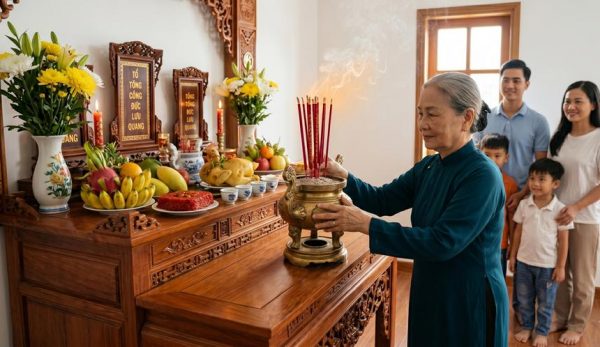
If you visit a traditional Vietnamese house, you will often find an ancestral altar in a clean and respectful area, usually in the most important part of the home.
The altar is considered a sacred place where family members remember and pay respect to their ancestors.
Depending on the family, an altar may include:
- Photographs of deceased parents or grandparents.
- An incense burner.
- Fresh flowers.
- Plates of fresh fruit.
- Small cups of tea or water.
- Traditional food offerings on special occasions.
The decorations and offerings can vary from family to family and from region to region.
During important family occasions, people prepare offerings and light incense as a gesture of respect. Some families also place their ancestors’ favorite foods on the altar, as a symbolic way of sharing a meal with them.
For Vietnamese people, the ancestral altar is more than a decorative part of the house. It represents family history, respect, and the connection between past and present generations.
3. When Do Vietnamese People Burn Incense?
Burning incense is not limited to religious ceremonies or special festivals. It can be part of everyday family life.
Here are some common occasions when Vietnamese people burn incense.
Every Morning or Evening
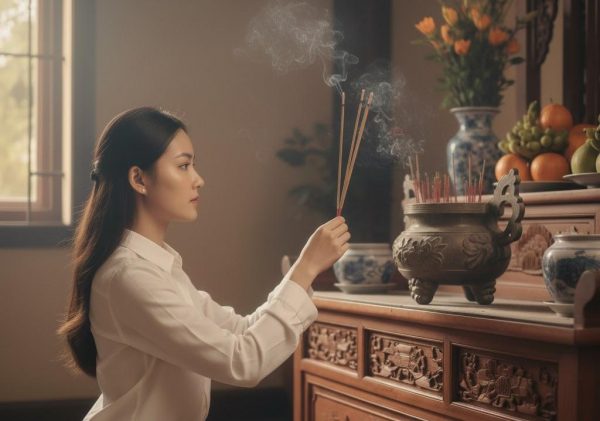
Some families have a daily habit of lighting incense on their ancestral altar, often in the morning or evening.
It is a quiet moment to remember ancestors, express gratitude, and wish for peace and happiness for the family.
However, not every household follows this daily routine. Some families only light incense on special days.
The First and Fifteenth Days of the Lunar Month
In Vietnam, the first day (mùng 1) and the fifteenth day (ngày rằm) of each lunar month are considered meaningful occasions.
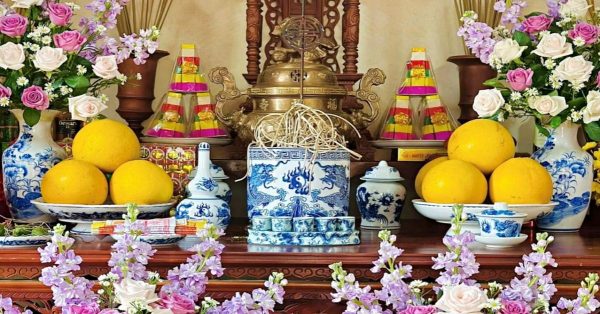
Many families prepare fresh fruit, flowers, tea, or other simple offerings and burn incense to show respect to their ancestors and deities.
You may notice more incense burning around temples, pagodas, local shrines, and family homes on these days.
Vietnamese Lunar New Year (Tet)
Tet, or Vietnamese Lunar New Year, is perhaps one of the most important occasions for ancestor worship.
Before welcoming the new year, families clean their homes, prepare traditional foods, decorate their ancestral altars, and offer incense to their ancestors.
One meaningful tradition is inviting ancestors to return home and celebrate Tet with their descendants.
For many Vietnamese families, the New Year celebration feels incomplete without this moment of remembrance.
It is also a time to pray for good health, happiness, prosperity, and a peaceful year ahead.
Death Anniversaries
Another important occasion is the anniversary of a family member’s death, known as ngày giỗ.
On this day, relatives may gather at the family home, prepare traditional dishes, and offer incense to remember the person who has passed away.
It is not necessarily a sad occasion. In many families, it is also an opportunity for relatives to reunite, share memories, and strengthen family relationships.
4. What Does the Smoke of Incense Symbolize?
Have you ever wondered why people use incense instead of simply placing flowers or food on an altar?
In traditional Vietnamese beliefs, incense is often considered a symbolic connection between the human world and the spiritual world.
As the incense burns, its smoke rises into the air. Many people see this as a way of sending their thoughts, wishes, and prayers to their ancestors or deities.
The fragrance also creates a peaceful and respectful atmosphere around the altar.
For some people, lighting incense is a moment of reflection. They may silently express their wishes, ask for guidance, or simply remember their loved ones.
The meaning is not always about asking for good luck or prosperity. Sometimes, it is simply about saying thank you.
This is one reason why incense has such an important place in Vietnamese spiritual and family traditions.
5. Is Burning Incense Only a Buddhist Tradition?
According to a 2024 report by the Pew Research Center, ancestor veneration remains an important cultural practice in Vietnam. You can read more about these traditions in their research on ancestor veneration, funerals, and afterlife beliefs.
Not necessarily.
Many international visitors associate incense burning with Buddhism because they often see incense in Vietnamese temples and pagodas.
However, burning incense at home is not exclusive to Buddhists.
Ancestor veneration is a cultural practice shared by many Vietnamese families, regardless of their religious background.
Even some Vietnamese Christians continue to honor their ancestors and maintain certain family traditions, although religious practices and interpretations may differ.
According to a 2024 Pew Research Center report, 96% of Vietnamese adults surveyed said they had burned incense to honor their ancestors in the previous 12 months.
This shows just how deeply rooted ancestor remembrance is in Vietnamese society.
6. A Tradition Passed Down Through Generations
Vietnam is changing rapidly. Modern apartments, busy lifestyles, and new generations are transforming the way people live.
However, the tradition of honoring ancestors remains meaningful to many Vietnamese families.
Some families maintain large traditional altars, while others have smaller and simpler ones to suit modern living spaces.
Some light incense every day, while others do so only during important occasions.
The way people practice may change, but the underlying values remain familiar: remembering family roots, respecting previous generations, and appreciating what our ancestors have done for us.
For many Vietnamese people, burning incense is not just an old custom. It is a small but meaningful way of keeping family memories alive.
7. What Should Foreign Visitors Know About This Tradition?
If you are visiting Vietnam, you will probably encounter incense burning in homes, temples, pagodas, and local shrines.
Here are a few simple things to remember:
- Do not touch or move items on an ancestral altar without permission.
- Avoid making loud jokes or behaving disrespectfully near worship areas.
- If you are invited to participate in an incense-offering ceremony, follow your host’s instructions.
- Dress respectfully when visiting temples and pagodas.
- Remember that traditions can differ between families and regions.
You do not need to understand every spiritual belief to appreciate the cultural meaning behind this practice.
Sometimes, simply observing quietly and showing respect is enough.
8. Discover More of Vietnamese Culture Through Coffee
Understanding Vietnamese culture is not only about visiting historical places or learning about traditional customs. Sometimes, the best way to experience local life is through everyday activities, including enjoying a cup of Vietnamese coffee.
Coffee has become an important part of daily life in Vietnam. From traditional phin coffee to modern favorites such as egg coffee, coconut coffee, and salt coffee, every cup has its own story.
If you are visiting Hoi An and love coffee, why not take the opportunity to explore this part of Vietnamese culture?
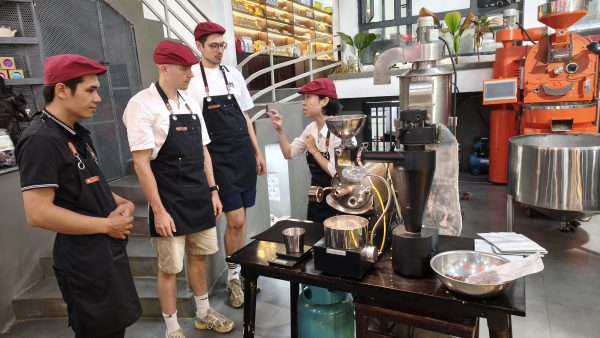
At Tri Long Coffee, you can join our Vietnamese Coffee Making Class at a local roastery, where you will discover the journey from green coffee beans to a finished cup. You can learn about Vietnamese coffee culture, experience the roasting process, grind coffee beans by hand, and make your own signature Vietnamese coffee.
It is a fun and hands-on way to understand another side of everyday life in Vietnam while enjoying your time in Hoi An.
Come and discover the taste of Vietnam with us!
Final Thoughts: More Than Just Burning Incense
So, why do Vietnamese people burn incense at home?
For many, it is a way to remember ancestors, express gratitude, pray for peace, and maintain a connection with their family roots.
Behind every incense stick is a story about family, memories, and respect for previous generations.
When you see incense smoke rising from a Vietnamese home, remember that you are witnessing more than a religious ritual. You are seeing a small part of Vietnamese culture that has been passed down through generations.
And perhaps this is one of the most beautiful things about Vietnam: even as life becomes more modern, people still find meaningful ways to remember where they come from.