
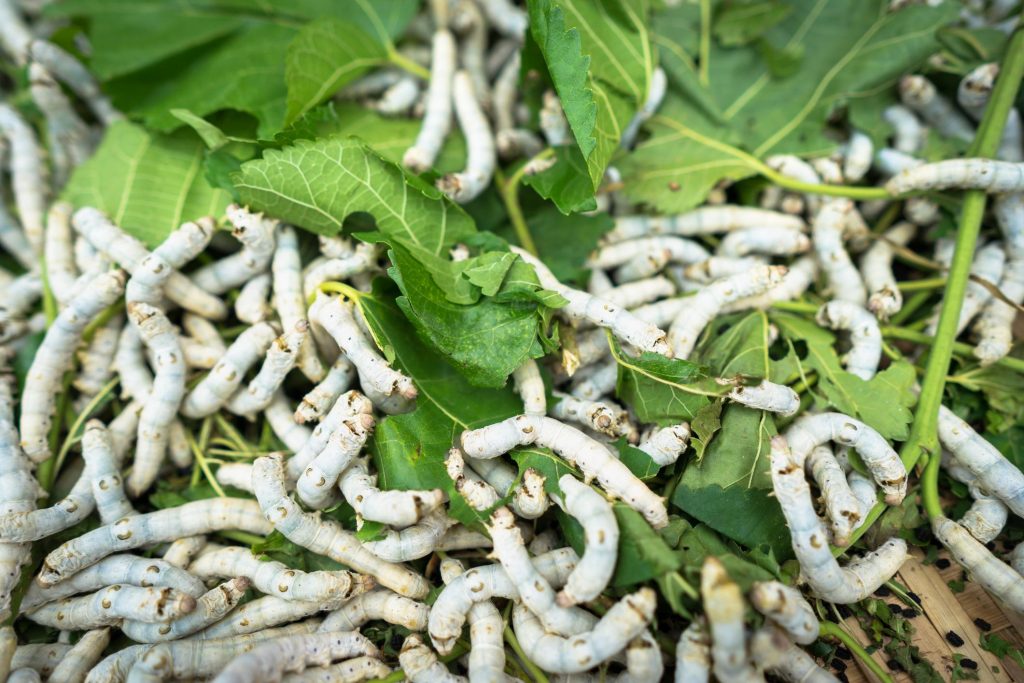
From Silkworm to Silk: Vietnam’s Traditional Silk-Making Process
Have you ever wondered how a tiny silkworm can create one of the most beautiful and delicate fabrics in the world?
Silk has been treasured in Vietnam for centuries. Known for its softness, natural shine, and lightweight texture, Vietnamese silk is more than just a luxurious material. It represents patience, craftsmanship, and generations of traditional knowledge passed down from one generation to another.
Behind every piece of silk fabric is a fascinating journey that begins with a small silkworm feeding on mulberry leaves and ends with skilled artisans transforming delicate threads into beautiful textiles.
From traditional weaving villages in Northern Vietnam to the historic silk trade of Hoi An, silk-making remains an important part of the country’s cultural heritage.
Let’s explore the traditional Vietnamese silk-making process, from silkworm to finished fabric.
1. The History of the Vietnamese Silk-Making Process
Silk has played an important role in Vietnamese history and everyday life for thousands of years.
In the past, silk was highly valued and often associated with elegance, prosperity, and social status. It was used to make traditional clothing, royal garments, ceremonial outfits, and beautiful gifts.
Vietnamese silk was also an important trading product. During the centuries when Hoi An was a busy international trading port, silk was among the goods exchanged between Vietnamese merchants and foreign traders.
Several traditional silk-weaving villages developed across the country, each becoming known for its own techniques and distinctive products.
Some of the best-known silk villages include:
- Van Phuc Silk Village, Hanoi: Famous for its traditional weaving techniques and delicate Van silk patterns.
- Nha Xa Silk Village, Ninh Binh: Known for its long-standing silk production and weaving traditions.
- Tan Chau Silk Village, An Giang: Famous for its traditional black silk, known as Lanh My A, which uses natural dye from mac nua fruit.
- Duy Xuyen Silk Village, Da Nang: An important traditional silk-making area near Hoi An, with a history of more than 300 years.
These villages continue to preserve traditional techniques while adapting their products to modern lifestyles.
2. Vietnamese Silk-Making Process: Raising Silkworms
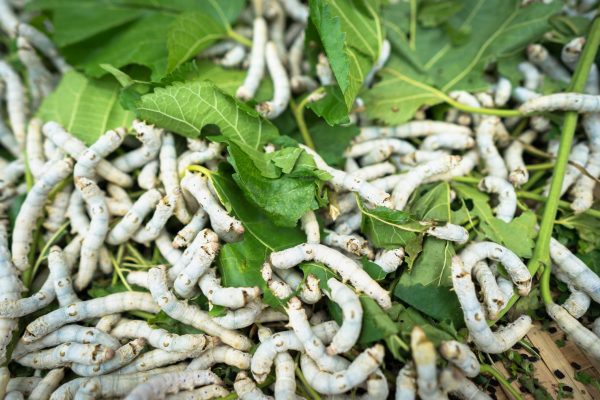
Every piece of natural silk begins with the silkworm, the larval stage of the domesticated silk moth.
Silkworms are usually raised in carefully maintained spaces where temperature, humidity, cleanliness, and food supply must be controlled.
Their main food is fresh mulberry leaves.
Farmers regularly provide fresh leaves because healthy silkworms produce better-quality cocoons. As the silkworms grow, they shed their skin several times before reaching maturity.
After approximately 25–30 days of development, depending on the conditions, mature silkworms stop eating and begin preparing to spin their cocoons.
This stage requires patience and careful attention from farmers, as the health of the silkworms directly influences the quality of the silk.
3. From Silkworm to Cocoon: The First Stage of Silk Making
One of the most fascinating stages of silk production happens when the mature silkworm begins spinning its cocoon.
Using silk-producing glands, the silkworm releases a liquid protein that hardens when exposed to air, forming a continuous filament.
The silkworm moves its head in repeated movements, gradually wrapping the filament around its body until it is completely enclosed inside a protective cocoon.
A single cocoon can contain a remarkably long silk filament, making this natural process one of the most impressive examples of craftsmanship in the animal world.
The cocoons are then collected when they are ready for silk production.
Their size, shape, color, and quality are carefully inspected before the next stage begins.
4. Vietnamese Silk-Making Process: Unwinding Silk Threads
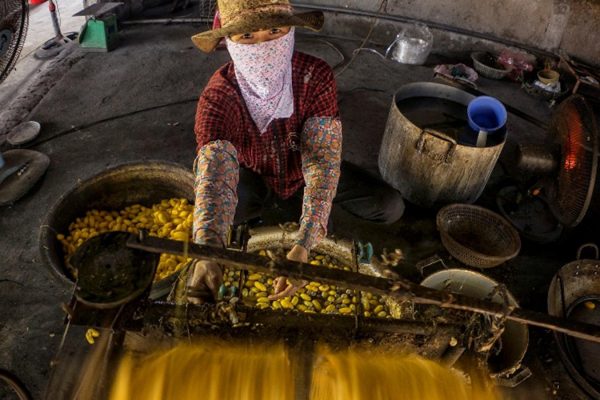
Now comes one of the most important stages of the traditional silk-making process: extracting the silk threads from the cocoons.
Fresh cocoons are placed in hot water to soften sericin, a natural gum-like protein that holds the silk filament together.
Once softened, workers carefully locate the loose ends of the filaments and begin unwinding them.
Because an individual silk filament is extremely fine, several filaments from different cocoons are usually combined to form one stronger, continuous thread.
This process is called silk reeling.
Traditionally, artisans performed this work using simple tools and hand-operated equipment. Although modern machinery is now used in many production facilities, traditional reeling techniques are still maintained in some craft villages.
The resulting raw silk threads are then collected into skeins or wound onto reels, ready for further processing.
5. Preparing Silk Yarn for the Traditional Weaving Process
Before weaving can begin, the silk threads need to be prepared.
The raw silk is wound, twisted, and organized into yarn suitable for weaving.
Depending on the production method, the yarn may undergo additional cleaning or degumming to remove remaining sericin and improve its softness, smoothness, and ability to absorb dye.
One particularly important task is warping.
Warping involves arranging hundreds or even thousands of individual threads parallel to one another at the correct length and tension.
These threads form the foundation of the fabric.
It is a highly demanding process because even one incorrectly positioned or broken thread can affect the quality of the finished textile.
This stage demonstrates why silk weaving requires not only creativity but also considerable technical skill and concentration.
6. Traditional Vietnamese Silk Weaving Process
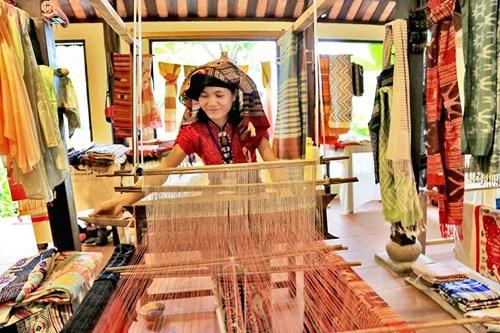
Once the yarn is prepared, it is time for the most recognizable stage of silk production: weaving.
Traditional Vietnamese artisans use looms to interlace two sets of threads:
- Warp threads: The long threads stretched vertically along the loom.
- Weft threads: The threads passed horizontally through the warp.
By carefully controlling the movement of these threads, weavers gradually create a piece of silk fabric.
Some traditional silk products feature simple, elegant patterns, while others require more complicated techniques to create decorative designs woven directly into the fabric.
In Van Phuc, for example, artisans are particularly well known for their intricate patterns and distinctive silk textures.
In traditional workshops, the rhythmic movement of the loom creates a fascinating atmosphere. Every movement requires precision, and every completed section brings the fabric one step closer to its final form.
Even with modern weaving equipment, the preparation, pattern design, and quality control still require considerable experience.
7. Dyeing and Finishing Vietnamese Silk Fabric
After weaving, the silk fabric undergoes its final stages of preparation.
Depending on the production method, silk may be dyed before or after weaving.
When dyeing finished fabric, artisans first prepare the material to ensure that it can absorb color evenly.
The silk is then immersed in carefully prepared dye solutions until the desired color is achieved.
Traditional Vietnamese silk producers have used various natural materials to create beautiful colors.
One famous example is Tan Chau silk in An Giang, where the fruit of the mac nua tree has traditionally been used to produce a distinctive deep black color.
After dyeing, the fabric is washed, dried, and carefully inspected.
Some products may receive additional finishing treatments to improve their softness, appearance, and texture.
Finally, the silk is ready to become scarves, dresses, shirts, traditional clothing, and many other beautiful products.
8. Vietnamese Silk in Hoi An – A Living Cultural Heritage
For travelers visiting Central Vietnam, discovering the silk-making tradition around Hoi An offers an interesting way to understand the region’s history.
Duy Xuyen, located near Hoi An, has a silk-weaving tradition dating back more than 300 years.
Historically, silk was an important part of Hoi An’s commercial life. As an international trading port, the town connected local products and Vietnamese craftsmanship with merchants from different parts of the world.
Today, visitors can explore silk-related workshops and discover different stages of production, from silkworm raising and cocoon processing to weaving.
Hoi An is also famous for its tailor shops, where visitors can choose fabrics and have garments made to their measurements.
A piece of Vietnamese silk is more than a souvenir. It carries the story of the people, skills, and traditions behind its creation.
9. From Traditional Silk to Vietnamese Coffee: Discover the Beauty of Local Craftsmanship
Vietnam is a country where traditional craftsmanship and everyday culture are deeply connected.
From the delicate threads of handmade silk to the rich aroma of freshly roasted coffee, many Vietnamese traditions share something in common: they begin with carefully selected natural ingredients and require knowledge, patience, and skilled hands to transform them into something special.
Just as silk-making takes you through the journey from silkworm to fabric, Vietnamese coffee has its own fascinating journey, from green coffee beans to the cup you enjoy.
Coffee is more than a popular drink in Vietnam. It is an important part of everyday life, bringing people together in local cafés, family gatherings, and quiet moments throughout the day.
At Tri Long Coffee Roastery in Hoi An, we love sharing this part of Vietnamese culture with visitors from around the world.
Through our hands-on Vietnamese Coffee Making Class, you can discover the story behind Vietnamese coffee and experience the process yourself.
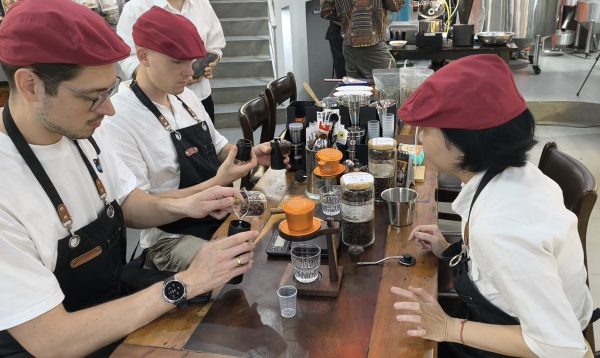
During the class, you will:
- Discover Vietnam’s main coffee varieties, including Robusta and Arabica, and learn about their growing regions.
- Understand different coffee roast levels through color, aroma, and flavor.
- Explore a real local coffee roastery and learn about the roasting process.
- Learn how to use the traditional Vietnamese Phin filter.
- Make your own Vietnamese signature drinks, such as Phin Coffee, Egg Coffee, Salt Coffee, and Coconut Coffee.
- Enjoy the coffee you prepare and take home a Vietnamese coffee recipe booklet and certificate.
Whether you are passionate about coffee or simply curious about Vietnamese traditions, this experience gives you a chance to discover local culture through taste, knowledge, and hands-on activities.
Come and experience Vietnamese coffee culture with us at Tri Long Coffee Roastery in Hoi An.
Because sometimes, the best way to understand a country’s traditions is to experience them yourself, one cup at a time.
Tri Long Coffee Roastery – Hoi An, Vietnam
Website: https://trilongcoffee.com/
WhatsApp: +84905454727