
Introduction: A Magical Art on the Water
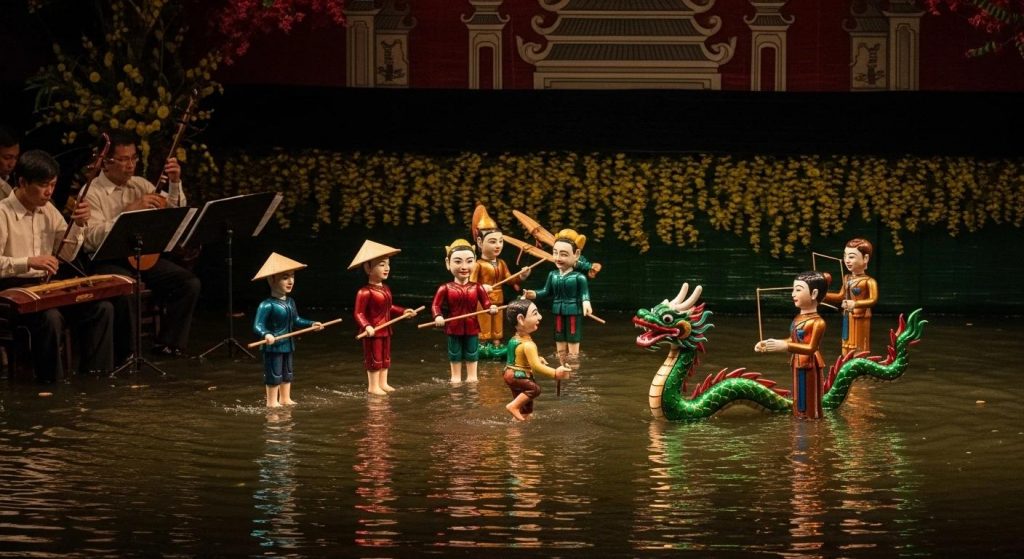
Imagine watching wooden characters dance, swim, and even breathe fire on the surface of a pond. Behind them, traditional Vietnamese music fills the air, while colorful puppets bring stories of village life to the audience.
This is Vietnamese Water Puppetry, one of the most fascinating traditional art forms in Vietnam.
Unlike conventional puppet theatre, which takes place on a stage, water puppetry uses water as its stage. It is an art form deeply connected to Vietnam’s agricultural heritage, rural communities, and centuries-old traditions.
For visitors exploring Vietnam, discovering water puppetry offers a wonderful opportunity to understand the country’s history and the everyday lives of its people.
Vietnamese Water Puppetry is more than a traditional performance; it is a reflection of the country’s agricultural history, local creativity, and community traditions. This unique art form continues to attract visitors who want to discover the authentic cultural identity of Vietnam.
1. The Origins: An Art Born in Vietnam’s Rice Fields
The history of Vietnamese Water Puppetry is closely connected to the rice-growing culture of northern Vietnam. The art developed from the everyday experiences of farmers, transforming ordinary village ponds into lively stages for storytelling and celebration.
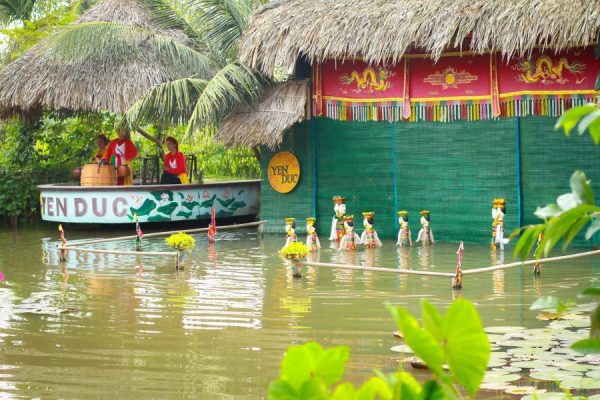
Vietnamese water puppetry has its roots in the Red River Delta in northern Vietnam, where wet-rice agriculture shaped the lives and traditions of local communities.Historians commonly trace the art form back to at least the 11th century. In rural villages, farmers developed a creative way to entertain one another after hard days working in the fields.
During festivals and special occasions, villagers gathered around ponds, lakes, and flooded rice fields to watch puppet performances.
Water became a natural stage, while wooden puppets represented farmers, animals, mythical creatures, and familiar scenes from village life.
Over generations, these performances developed into a distinctive form of folk theatre, passed down through families and traditional artisan communities.
What makes water puppetry especially meaningful is that it was not originally created for tourists. It grew naturally from the daily experiences, imagination, and community spirit of Vietnamese farmers.
2. How Does a Water Puppet Show Work?
One reason Vietnamese Water Puppetry is so fascinating is the combination of traditional craftsmanship and technical skill. Each puppet requires careful carving, painting, and a specially designed control system to create realistic movements on the water.
At first glance, water puppetry may look like magic. Wooden figures move effortlessly across the water, turn around, dance, and interact with one another.
But behind this magic is the skill and dedication of experienced puppeteers.
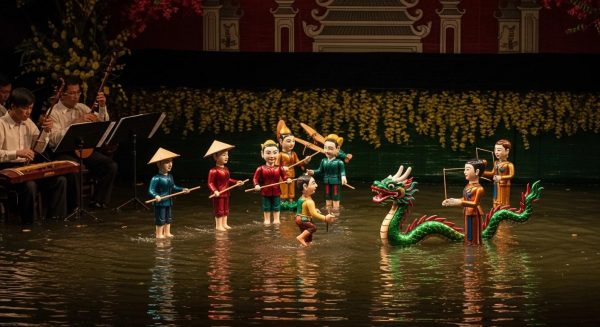
The puppeteers stand behind a screen, often waist-deep in water, controlling the puppets from behind the stage. Their movements must be precise and carefully coordinated to make each character appear alive.
A traditional performance also includes live musicians who play instruments such as drums, flutes, and traditional Vietnamese string instruments.
The combination of movement, music, sound effects, and storytelling creates an entertaining experience for audiences of all ages.
It is not simply about moving wooden figures. It is about bringing Vietnamese folk stories and cultural memories to life.
3. Stories Told Through Water Puppetry
Through Vietnamese Water Puppetry, audiences can discover traditional Vietnamese stories that celebrate farming, fishing, village festivals, and the close relationship between people and nature.
One of the most charming aspects of water puppetry is its storytelling.
Rather than focusing only on kings, warriors, or historical events, many performances celebrate ordinary village life.
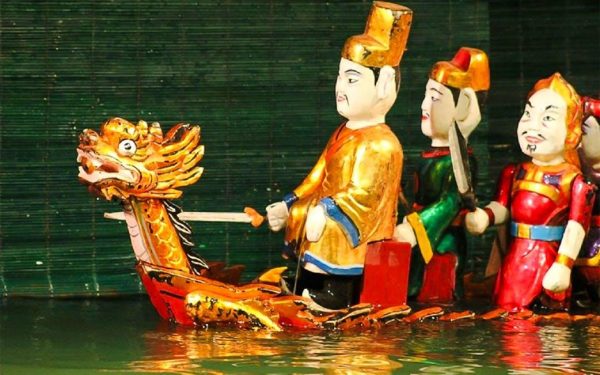
Some popular scenes include:
-
Farming and rice cultivation: Farmers working in the fields, planting rice, and harvesting crops.
-
Fishing and rural life: Fishermen catching fish, children playing, and farmers tending their buffaloes.
-
Village festivals: Traditional celebrations featuring dancing, music, and joyful community gatherings.
-
Mythical creatures: Dragons, phoenixes, and other legendary characters appearing in spectacular performances.
-
Historical legends: Stories inspired by Vietnamese history, folklore, and national traditions.
These performances offer more than entertainment. They provide a glimpse into the values, beliefs, humor, and relationship with nature that have shaped Vietnamese society.
Even without understanding the Vietnamese language, international visitors can often follow the stories through the puppets’ expressive movements and the lively atmosphere.
4. Where Can You Experience Water Puppetry in Vietnam?
If you would like to experience this traditional art form during your trip, several destinations offer water puppet performances.
Hanoi
Hanoi is one of the most well-known places to enjoy traditional water puppetry. The Thang Long Water Puppet Theatre, located near Hoan Kiem Lake, welcomes visitors with regular performances inspired by Vietnamese folk traditions.
Hoi An
Hoi An is famous for its ancient streets, lanterns, traditional architecture, and cultural experiences. Visitors can also look for local water puppet performances and cultural shows during their stay.
Although water puppetry originated in northern Vietnam, its stories and artistic traditions have become part of the country’s broader cultural identity.
Other destinations
Traditional water puppet performances and related folk arts can also be found at cultural events and festivals in different parts of Vietnam.
If you have the opportunity, try to include a traditional performance in your itinerary. It is a memorable way to discover a side of Vietnam beyond its famous landscapes and tourist attractions.
5. Discover Vietnamese Culture Through Everyday Experiences
Experiencing Vietnamese Water Puppetry is a wonderful way to understand the traditions and creativity of local communities. Together with Vietnamese food, traditional crafts, and coffee culture, it offers visitors a deeper appreciation of Vietnam.
Vietnamese culture is not only found in theatres, historical monuments, or traditional festivals. It is also present in everyday activities, family gatherings, local markets, and the simple habit of sharing a cup of coffee.
Just as water puppetry reflects the creativity and agricultural traditions of Vietnamese farmers, Vietnamese coffee tells another story about the country’s history and daily lifestyle.
Coffee has become an important part of everyday life in Vietnam. From small street-side cafés to family-run coffee shops, people gather over a cup of coffee to relax, talk, and enjoy the moment.
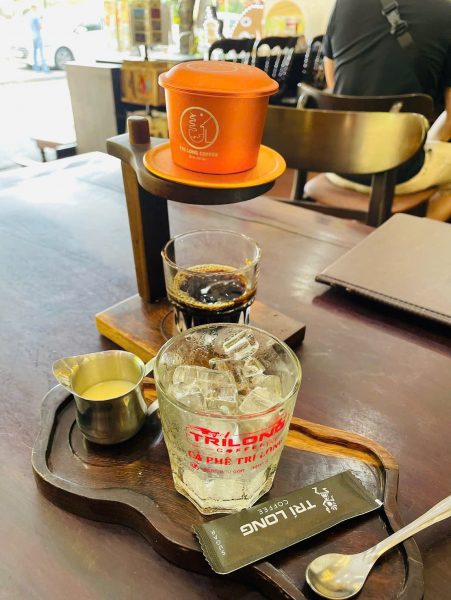
In Hoi An, you can discover this culture in a more personal way at Tri Long Coffee.
At our local roastery, visitors have the opportunity to explore Vietnamese coffee from the beans to the final cup. You can learn about Robusta and Arabica coffee, observe the real roasting process, discover traditional Vietnamese brewing methods, and prepare your own signature drinks with guidance from our instructor.
Whether you are curious about traditional Phin Coffee, Egg Coffee, Salt Coffee, or Coconut Coffee, each cup offers a different taste of Vietnamese culture.
Rather than simply drinking coffee, you get to understand the stories, techniques, and traditions behind it.
Conclusion: Experience the Living Traditions of Vietnam
Vietnamese water puppetry is much more than a traditional performance. It is a reflection of rural life, agricultural heritage, creativity, and the community spirit that has been passed down through generations.
From the rice fields of northern Vietnam to the lively streets of Hoi An, Vietnamese traditions continue to evolve while remaining connected to their roots.
When you travel through Vietnam, take the time to experience its culture beyond sightseeing. Watch a traditional performance, visit a local market, taste regional food, or enjoy a cup of freshly brewed Vietnamese coffee.
Sometimes, the most memorable travel experiences come from the simplest moments of discovering how local people live.
Come and discover the taste of Vietnamese coffee with us at Tri Long Coffee in Hoi An!