
1. A Symbol of Vietnam Recognized Around the World
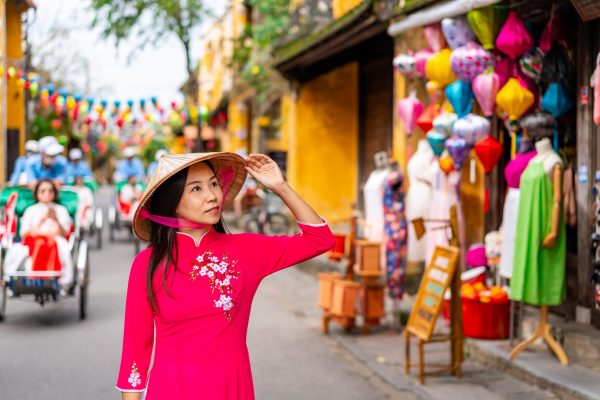
When people think of Vietnam, several images often come to mind: green rice fields, traditional ao dai, colorful lanterns, and the elegant Vietnamese conical hat, known locally as Non La (nón lá).
With its simple cone shape and natural materials, the Non La may look like an ordinary hat at first glance. However, it carries a much deeper story about Vietnamese history, craftsmanship, traditions, and everyday life.
For generations, this familiar hat has accompanied farmers working in the fields, women going to local markets, and street vendors traveling under the tropical sun and sudden rain showers.
Today, it remains one of the most recognizable symbols of Vietnamese culture.
But have you ever wondered how this iconic hat came to be, how it is made, and why it means so much to Vietnamese people?
Let’s explore the story behind the Vietnamese conical hat.
2. The History of the Vietnamese Conical Hat
Over centuries, the hat gradually developed into the familiar form we recognize today.
Its design was closely connected to Vietnam’s tropical climate and agricultural lifestyle. With long hours spent working outdoors, people needed something lightweight and practical to protect themselves from strong sunshine and sudden rain.
The conical shape provided good coverage for the head and face, while its lightweight construction made it comfortable to wear throughout the day.
What started as a practical everyday item eventually became an important part of Vietnamese cultural identity.
3. How Is a Traditional Non La Made?
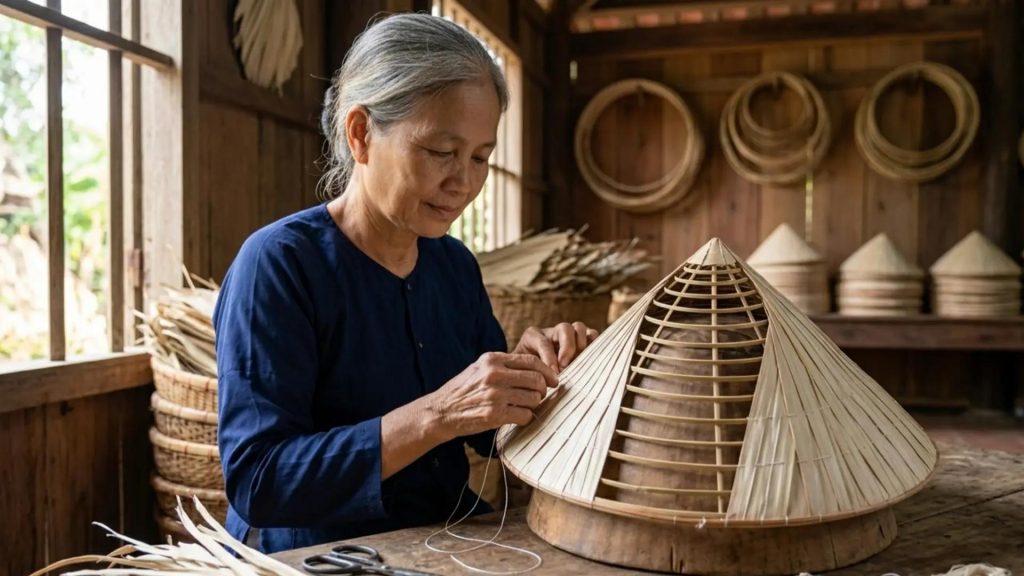
One of the most fascinating things about a traditional Non La is that it is made primarily from natural materials using techniques passed down through generations.
The main materials include:
-
Palm leaves: Carefully selected, dried, and processed to create the outer surface of the hat.
-
Bamboo: Used to form the circular rings that create the hat’s distinctive conical structure.
-
Thread: Used to sew the leaves securely onto the bamboo frame.
Making a Vietnamese conical hat requires patience, precision, and skilled hands.
The process usually involves several steps.
Step 1: Preparing the leaves
Artisans select suitable leaves, dry them, and carefully flatten them to make them smooth and ready for sewing.
Step 2: Creating the bamboo frame
Thin bamboo strips are shaped into circular rings and arranged to form the conical structure of the hat.
Step 3: Arranging the leaves
The prepared leaves are carefully placed over the bamboo frame, with each layer positioned evenly to create a smooth surface.
Step 4: Sewing the hat
Using a needle and thread, artisans patiently sew the leaves onto the bamboo rings. This stage requires particular care because the stitches need to be small, regular, and strong.
Step 5: Finishing the hat
The edges are trimmed, the brim is completed, and a chin strap is attached to make the hat comfortable to wear.
Although the materials may look simple, creating a beautiful and durable Non La requires considerable experience and attention to detail.
Each handmade hat reflects the dedication and craftsmanship of the person who makes it.
4. Different Types of Vietnamese Conical Hats
Although many visitors recognize the classic white conical hat, Vietnam actually has several variations, each with its own characteristics and cultural significance.
The Traditional Non La
This is the familiar palm-leaf hat commonly seen throughout Vietnam. It is lightweight, practical, and suitable for everyday activities, particularly in rural areas.
The Hue Poem Hat (Non Bai Tho)
One of the most special variations comes from Hue, the former imperial capital of Vietnam.
At first glance, it looks like an ordinary conical hat. However, when held up against the sunlight, hidden poems, decorative patterns, or images appear between the layers of leaves.
This delicate detail transforms a practical object into a beautiful piece of traditional art.
Decorative Conical Hats
Some conical hats are decorated with colorful paintings, embroidery, ribbons, or other artistic details. These are often made as souvenirs, gifts, or decorative items for visitors.
Despite their differences, all these variations share the same recognizable shape and connection to Vietnamese culture.
5. The Meaning of Non La in Vietnamese Culture

The Vietnamese conical hat is more than a way to protect yourself from the weather. It represents simplicity, resilience, and the close relationship between Vietnamese people and their natural surroundings.
For generations, the image of a woman wearing a Non La with a flowing ao dai has become a familiar symbol of Vietnamese elegance.
In traditional poetry, paintings, and folk songs, the conical hat often appears alongside images of peaceful villages, green rice fields, and everyday Vietnamese life.
It also reflects the resourcefulness of Vietnamese people. Using simple materials available in nature, artisans transform palm leaves and bamboo into something both practical and beautiful.
Even today, despite modern fashion and changing lifestyles, the Non La continues to hold a special place in the hearts of Vietnamese people.
6. Non La in Everyday Vietnamese Life
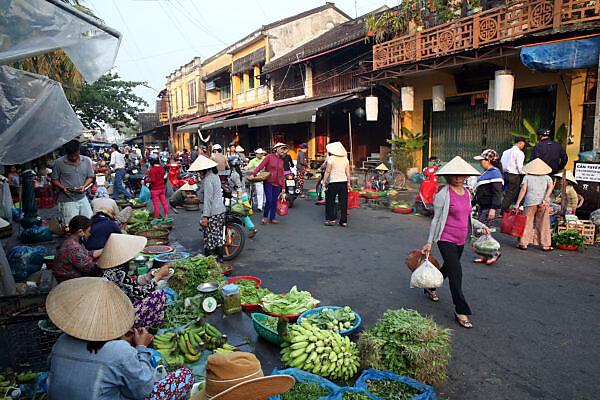
You may see farmers wearing it while working in rice fields, street vendors using it to protect themselves from the afternoon sun, or women riding bicycles through quiet streets.
In some rural areas, people also use their hats as temporary fans during hot weather or as convenient containers for carrying small items.
In busy cities and traditional markets, the Non La remains a familiar sight, connecting modern Vietnamese life with generations of traditions.
For international visitors, seeing a local person wearing a conical hat is often one of those simple but memorable moments that captures the charm of Vietnam.
7. Where Can You Experience Traditional Vietnamese Culture?
If you want to understand the story of the Vietnamese conical hat more deeply, visiting a traditional craft village is a wonderful experience.
Located south of Hanoi, Chuong Village is one of Vietnam’s best-known traditional conical hat-making villages. The craft has been preserved here for generations, and visitors can learn about the process of making Non La from local artisans.
Hue – The Home of the Poem Hat
Hue is famous for its traditional Non Bai Tho, or poem hat. Visitors can discover the delicate craftsmanship behind these hats and learn how hidden patterns and poems are incorporated into their design.
Hoi An – Discovering Everyday Vietnamese Life
In Hoi An, the conical hat is a familiar part of the town’s charming atmosphere. You may spot local vendors wearing Non La along the streets, in traditional markets, and beside the Thu Bon River.
Beyond its beautiful architecture and lantern-lit streets, Hoi An offers many opportunities to discover Vietnamese traditions through local food, coffee, handicrafts, and everyday activities.
Taking time to observe these small details can help you understand the culture in a more meaningful way.
8. From Vietnamese Traditions to the Culture of Vietnamese Coffee
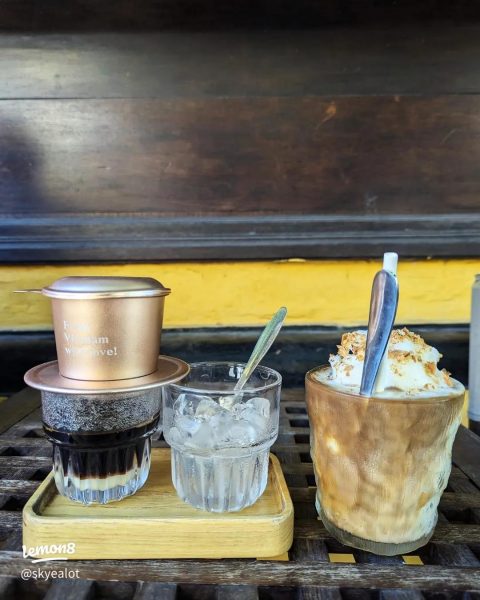
Just as the Non La represents a long-standing Vietnamese tradition, coffee is another important part of everyday life in Vietnam.
For many Vietnamese people, coffee is more than just a drink. It is a daily ritual, a reason to slow down, and an opportunity to connect with friends and family.
If you walk through the streets of Hoi An in the morning, you may notice locals sitting at small coffee shops, slowly enjoying their coffee brewed with a traditional Phin filter.
The slow dripping process is part of the experience. It encourages people to take a break, enjoy the moment, and appreciate the simple pleasures of everyday life.
If you are curious about how Vietnamese coffee is made, why traditional Phin filters are so popular, or what makes Vietnamese coffee different from coffee in other countries, why not experience it firsthand?
Discover Vietnamese Coffee Culture at Tri Long Coffee
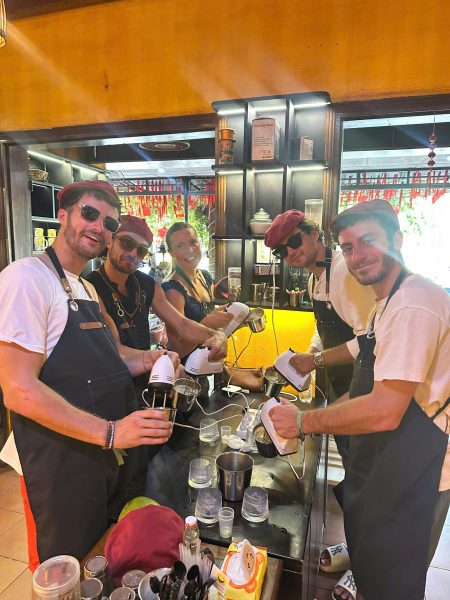
At Tri Long Coffee, a local coffee roastery in Hoi An, you can discover Vietnamese coffee culture through a hands-on coffee-making experience.
During our Vietnamese Coffee Making Class, you will:
-
Discover Vietnam’s main coffee varieties and the characteristics of different growing regions.
-
Learn about traditional coffee roasting and the journey from green beans to roasted coffee.
-
Explore the history and culture of Vietnamese coffee.
-
Grind coffee beans and learn how to brew authentic Vietnamese coffee using a traditional Phin filter.
-
Make and enjoy your own signature Vietnamese drinks, such as Phin Coffee, Egg Coffee, Salt Coffee, or Coconut Coffee.
Whether you are a coffee lover or simply curious about Vietnamese culture, this experience offers a wonderful opportunity to learn something new and take home more than just memories.
Join us at Tri Long Coffee and discover another fascinating part of Vietnamese culture, one cup at a time.
Explore Our Vietnamese Coffee Making Class
9. More Than Just a Hat: A Timeless Symbol of Vietnam
The Vietnamese conical hat may be made from simple materials, but its story is anything but ordinary.
It tells us about the creativity of Vietnamese artisans, the resourcefulness of generations past, and the beauty of everyday life in Vietnam.
From the green rice fields of the countryside to the ancient streets of Hoi An, the Non La continues to represent a connection between people, nature, and tradition.
So, the next time you see someone wearing a conical hat in Vietnam, take a closer look. Behind its simple shape lies a beautiful story that has been passed down through generations.
And as you explore Vietnam, remember that its culture is best understood not only by what you see, but also by what you experience.
Discover Vietnam through its traditions, local people, and the simple pleasure of a cup of Vietnamese coffee at Tri Long Coffee in Hoi An.